Daijiworld Media Network – Dubai
Dubai, Nov 23: Iran has warned that it will use all available means to confront the United States naval blockade targeting its oil exports, signalling continued tensions between the two countries despite earlier diplomatic efforts to reach an understanding.
Iranian Foreign Ministry spokesperson Esmaeil Baghaei made the statement on Monday during his weekly news conference, responding to questions about the US restrictions on Iranian maritime trade and oil shipments.
The blockade was initially imposed on April 13 after diplomatic talks between Washington and Tehran failed to produce an agreement. The US military announced restrictions on shipping to and from Iranian ports, including those along the Persian Gulf and Gulf of Oman.
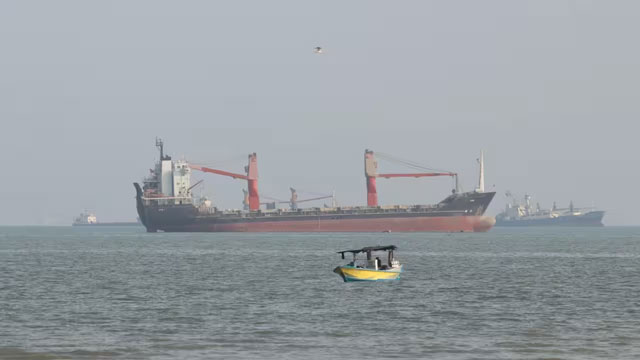
The restrictions were lifted in June after Washington and Tehran reached a preliminary understanding aimed at easing the confrontation and restoring maritime activity. However, the arrangement collapsed, and the United States reinstated the blockade on July 14.
The US measures are directed at vessels travelling to or from Iranian ports and coastal areas. They are intended to restrict Iran's ability to export oil and access international maritime trade routes. The restrictions do not amount to a general blockade of all shipping through the Strait of Hormuz, with vessels travelling between non-Iranian ports not included in the original scope of the restrictions.
The pressure on Iranian oil shipments has intensified in recent days. According to a Reuters report on November 18, the US Central Command issued an advisory warning that vessels receiving cargo at sea from ships carrying goods loaded at Iranian ports or coastlines could also be treated as attempting to evade the blockade.
Under the advisory, US forces may stop, board, divert or capture such vessels, or order them to return their cargo to its Iranian port of origin. Ships that fail to comply with lawful instructions could face enforcement action, including the use of force in accordance with applicable law.
Despite the restrictions, Iran has continued to export some liquefied petroleum gas and jet fuel, Reuters reported, citing shipping and security sources. However, Iranian crude oil exports have remained close to a standstill for months.
The blockade has significant implications for international energy markets because the Strait of Hormuz is one of the world's most important oil and gas transit routes. The waterway connects the Persian Gulf with the Gulf of Oman and the Arabian Sea, serving as a major export passage for energy-producing countries in the region.
When the blockade was first announced in April, Reuters reported that restrictions on Iranian shipping could prevent around two million barrels of Iranian oil per day from reaching global markets. China has been a major buyer of Iranian crude, making the restrictions particularly significant for Asian energy markets.
The latest warning from Tehran comes amid continuing uncertainty over the prospects of renewed negotiations between the two countries. While the June understanding had raised hopes of easing maritime restrictions and restoring trade, its collapse led to the reinstatement of US measures and further pressure on Iran's oil exports.
Baghaei's statement did not specify what measures Iran would take in response to the blockade. However, his remarks underline Tehran's opposition to the restrictions and the possibility of further tensions over maritime access and energy shipments in the region.