Daijiworld Media Network - Bengaluru
Bengaluru, Dec 2: In a major development, the Karnataka government has officially phased out the traditional e-stamping system and introduced Digital E-Stamping, giving stamp papers a fully digital upgrade.
Digital E-Stamping has been officially in effect across the state since October, replacing physical e-stamp papers with a secure online system. Addressing a press conference at Vidhana Soudha on Sunday, Revenue Minister Krishna Byre Gowda said, “Going forward, the focus will be entirely on the use of digital stamp papers. E-stamps will be gradually discontinued. To strengthen the digital stamping process, digital signatures have now been given full legal validity. The Karnataka Stamp (Amendment) Bill 2025 has been implemented for this purpose.”
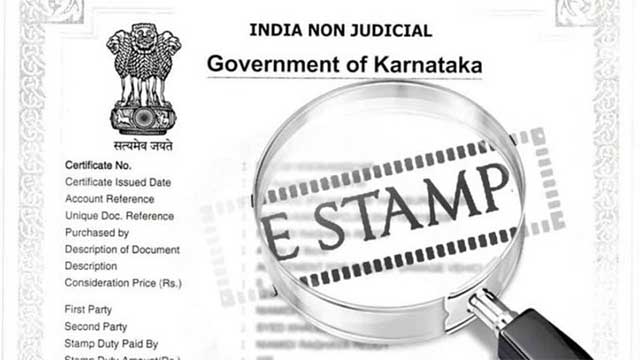
The new system allows citizens to generate stamp papers online without depending on agents or intermediaries. The entire process is paperless and supports digital governance. Citizens can produce a digital e-stamp from home, and the service is available 24×7 across India, removing geographical barriers.
As Karnataka moves towards complete digital registration, Minister Gowda said eliminating loopholes in the stamping process has become essential. The introduction of Digital E-Stamping enhances efficiency, transparency, and security in document stamping.
The move also aims to curb stamp misuse. To prevent fraud, such as obtaining stamp papers through fake challans, the state has enabled online fee payment and provided legal backing to electronic signatures. Aadhaar authentication has been made mandatory.
The minister said the Digital E-Stamp system offers improved security features, seamless system integration, elimination of fraudulent practices, better revenue assurance, cost savings, enhanced transparency, and higher administrative efficiency.
Digital stamping becomes part of the document itself, preventing misuse and ensuring verification. Documents can be digitally signed using Aadhaar-based e-sign or DSC (if Aadhaar is unavailable), allowing complete digital execution.
Digital e-stamps will also apply to unregistered agreements. Previously, people had to visit authorised stamp vendors to purchase stamp papers. “Now, stamp papers can be purchased from home. There is no need to rely on intermediaries. Everything is online and secure. Earlier, if the stamp paper was lost, the document was gone. Now, once an agreement is created, the digital record remains safe and can be retrieved anytime,” the minister explained.
All types of digital agreements will be supported, with a unique number and QR code. The cost of digital stamp papers will not increase. To execute an agreement, parties must authenticate using Aadhaar and OTP. The government will soon make digital e-stamps mandatory across the state.
Earlier, physical stamp papers were printed at the Nashik Security Press and distributed through licensed vendors. After the large-scale Telgi stamp paper scam exposed widespread fraud—including counterfeit and reused stamp papers—the government discontinued physical stamp papers and introduced alternative secure methods. Later, SHCIL (Stock Holding Corporation of India Ltd) was appointed as the authorised agency to issue e-stamps. However, issues such as counterfeiting, incorrect categorisation, and stamp duty evasion continued, prompting the shift to the new digital system, minister Gowda said.