Daijiworld Media Network - New Delhi
New Delhi, Dec 19: The Supreme Court has overturned the conviction of an accused in a 21-year-old murder case, ruling that a person cannot be found guilty solely on the basis of the “last seen together” theory without a complete and unbroken chain of circumstantial evidence.
A bench comprising Justices Sanjay Karol and Prashant Kumar Mishra set aside the judgments of the Chhattisgarh High Court and the trial court, which had convicted the appellant under Sections 302 (murder) and 201 (causing disappearance of evidence) of the Indian Penal Code. The lower courts had sentenced him to life imprisonment for murder and five years of rigorous imprisonment for destroying evidence.
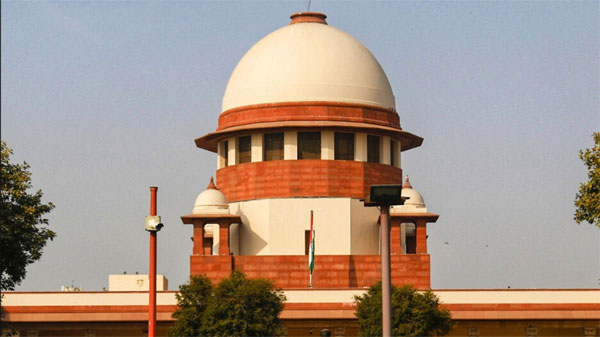
“The conviction only on the basis of last seen together cannot be sustained,” the bench observed, noting that the material on record failed to establish guilt beyond reasonable doubt.
As per the prosecution’s case, the appellant and several others had allegedly taken a tractor driver with them on the pretext of collecting cable wire. The driver was later found dead with burn injuries. While five co-accused were acquitted by the trial court, the appellant was convicted mainly on the strength of witness testimonies relating to the last seen circumstance.
The apex court reiterated the settled legal principle that circumstantial evidence must form a complete and coherent chain that points exclusively to the guilt of the accused. “Circumstantial evidence can be the basis of conviction only when it is wholly inconsistent with the innocence of the accused and consistent only with his guilt,” the bench stated.
Rejecting the prosecution’s reliance on the last seen theory, the court categorically held that “a conviction cannot be based on the only circumstance of last seen together.”
The court also disapproved of the Chhattisgarh High Court’s reasoning in drawing an adverse inference against the appellant under Section 106 of the Indian Evidence Act for failing to explain when he parted ways with the deceased. It clarified that Section 106 does not absolve the prosecution of its primary responsibility to prove the case beyond reasonable doubt.
Finding that the prosecution failed to establish motive and noting the absence of any corroborative evidence apart from the last seen circumstance, the bench ruled that the accused was entitled to the benefit of doubt.
“In the present case, the evidence may raise suspicion, but it is not so conclusive as to justify a conviction solely on the basis of last seen together,” the court concluded.
Accordingly, the Supreme Court acquitted the appellant of all charges and discharged his bail bonds, as he was already out on bail.