Daijiworld Media Network - Tehran
Tehran, Dec 30: Iran witnessed its largest wave of protests in three years on Monday after the national currency, the rial, plunged to a record low against the US dollar, triggering widespread public anger and forcing the resignation of the country’s Central Bank chief.
State television confirmed the resignation of Central Bank head Mohammad Reza Farzin as traders and shopkeepers poured onto the streets of Tehran, staging demonstrations in key commercial areas including Saadi Street and the Shush neighbourhood near the historic Grand Bazaar. The Bazaar merchants, who played a decisive role during the 1979 Islamic Revolution, were seen shutting down shops in protest.
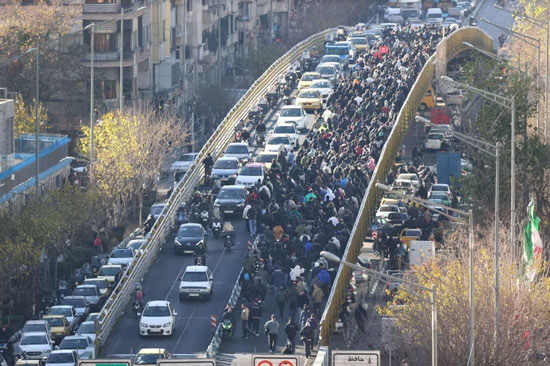
The official IRNA news agency acknowledged the unrest, while witnesses reported similar demonstrations in major cities such as Isfahan, Shiraz and Mashhad. In parts of Tehran, police used tear gas to disperse protesters as tensions escalated.
Monday’s protests marked the biggest public unrest since 2022, when the death of Mahsa Jina Amini in police custody had sparked nationwide demonstrations. According to witnesses, traders urged fellow shopkeepers to close businesses, bringing commercial activity to a standstill in several areas.
Iran’s currency crisis deepened after the rial fell to 1.42 million against the dollar on Sunday, before slightly recovering to 1.38 million on Monday. When Farzin assumed office in 2022, the exchange rate stood at around 430,000 rials per dollar.
The sharp depreciation has fuelled soaring inflation, driving up prices of essential commodities and placing severe strain on household budgets. Official data shows inflation touched 42.2 per cent in December, with food prices rising by 72 per cent and healthcare costs surging by 50 per cent compared to last year. Critics have warned that the economy is edging dangerously close to hyperinflation.
Public anxiety has further intensified amid reports that the government plans to raise taxes in the Iranian New Year beginning March 21, along with recent changes to fuel prices.
Economic uncertainty has also been compounded by geopolitical tensions, including fears of renewed conflict following last month’s 12-day confrontation between Iran and Israel and the possibility of US involvement. In addition, the reimposition of UN nuclear-related sanctions through the ‘snapback’ mechanism has once again frozen Iranian assets abroad and tightened restrictions on trade and arms transactions.
With mounting economic pressure and political uncertainty, Iran appears to be facing one of its most challenging periods in recent years.