Daijiworld Media Network – New Delhi
New Delhi, Feb 17: The Indian Air Force (IAF), which achieved air superiority during Operation Sindoor, remains at the centre of discussions on air power, force modernisation and future capability requirements.
In a detailed interaction with The New Indian Express, Air Vice Marshal (Retd) Anil Golani — who raised and commanded the IAF’s first Harpy squadron and later retired as Chief Staff Officer (Air Vector) at the Strategic Forces Command — shared his views on lessons from recent conflicts, fighter acquisitions, indigenous capability development and India’s push for aero-engine self-reliance. Golani currently serves as Director General of the Centre for Aerospace Power and Strategy Studies (CAPSS).
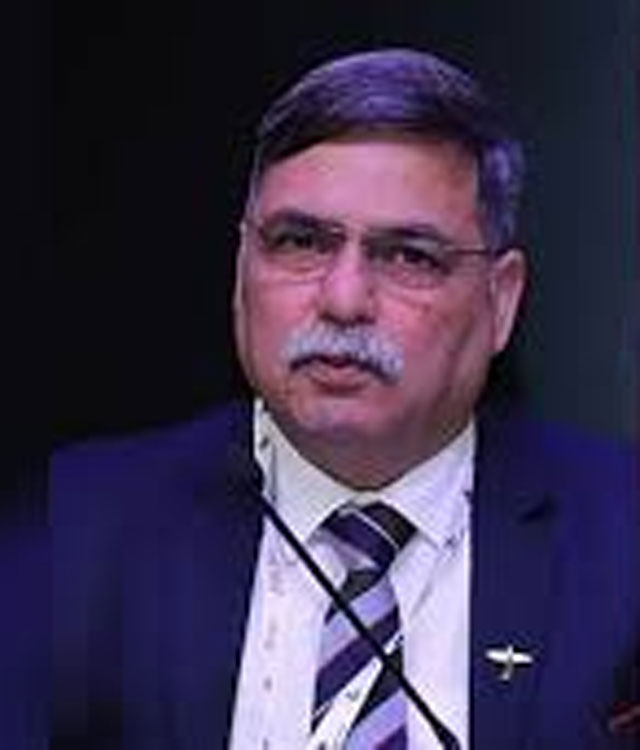
Golani said Operation Sindoor, along with recent conflicts such as Operation Midnight Hammer and Operation Rising Lion, underlined the centrality of air power in contemporary warfare.
He noted that beyond-visual-range (BVR) engagements and non-contact operations are increasingly decisive. Sustained investment in electronic warfare and intelligence, surveillance and reconnaissance (ISR) capabilities, he stressed, is essential to maintain operational control in modern battlefields.
On defence spending, Golani observed that the allocation has risen by around 15 per cent and currently stands at roughly 1.9 to 2 per cent of GDP. While moving towards 2.5 per cent of GDP is a reasonable objective, he emphasised that such an increase should be gradual.
He underlined that budget expansion must align with the Indian defence industry’s capacity to absorb and utilise funds effectively. Predictable and calibrated increases, rather than sharp spikes, are necessary to sustain procurement pipelines and production capacities.
With Pakistan reportedly planning to induct China’s Shenyang J-35, questions have arisen about whether India should import a fifth-generation fighter as a stop-gap measure.
Golani said importing such a platform may not be necessary, especially as the indigenous Advanced Medium Combat Aircraft (AMCA) programme is underway.
In modern warfare, he argued, platforms alone are no longer decisive. The emphasis has shifted from a linear “kill chain” to a broader “kill web”, where sensors, shooters and data networks operate in an integrated manner. Capability, he noted, is increasingly defined by networked operations rather than the aircraft alone.
On the proposed acquisition of 114 Dassault Rafale aircraft, Golani said the move must be viewed in the context of the IAF’s current squadron strength — about 29 against a sanctioned strength of 42.5.
With several legacy platforms slated for phased retirement, the induction of Multi-Role Fighter Aircraft (MRFA) is essential to sustain operational capability. Additional Rafales would also bring logistical and operational advantages, given that the IAF already operates 36 of the jets.
He noted that commonality in training, maintenance and weapons systems would reduce lifecycle costs while providing a relatively quick capability boost. By the time new aircraft are inducted, they are expected to feature the more advanced F5 configuration, compared to the F3 variant currently in service.
Addressing concerns that further Rafale acquisitions may curb ‘Aatmanirbharta’, Golani termed the debate a false binary.
He said indigenous programmes like HAL Tejas and AMCA remain central to long-term self-reliance but operate on extended development timelines. Interim acquisitions help maintain operational readiness while domestic programmes mature.
Importantly, around 96 of the proposed 114 aircraft are expected to be manufactured in India with 50–60 per cent indigenous content. Access to source codes would enable integration of indigenous weapons such as the Astra BVR missile and BrahMos-NG, thereby strengthening the domestic aerospace ecosystem.
The IAF is expected to receive 88 single-seat fighters and 26 twin-seat variants under the proposed deal. Golani explained that the numbers are proportionate to fleet expansion.
With the addition of 114 aircraft, the Rafale fleet could expand to about eight squadrons. Each squadron typically maintains three to four twin-seat aircraft for training and conversion.
Crucially, twin-seat Rafales are fully combat-capable and can undertake operational missions, offering both training depth and combat flexibility.
On delays in delivery of the Tejas Mk1A by Hindustan Aeronautics Limited (HAL), despite a substantial order, Golani pointed to integration and compliance issues with Air Staff Qualitative Requirements (ASQRs).
He said the Mk1A batches equipped with the Israeli ELM-2052 radar have faced integration challenges with onboard sensors and weapons such as Astra Mk1. Learning from earlier experiences with the Tejas Mk1, the IAF now prefers to accept aircraft only after all stipulated standards are met, to avoid operational complications later.
On achieving self-reliance in aero-engine development, Golani stressed the need for clear policy direction, institutional accountability and sustained long-term investment.
He called for parallel development of indigenous capability alongside collaboration with foreign original equipment manufacturers (OEMs) to ensure technology absorption. A significant increase in research and development spending — with a long-term aim of allocating around 5 per cent of the defence budget to R&D — would be crucial for building sustainable domestic capability.
As debates continue over modernisation, procurement and indigenisation, Golani’s remarks underscore the balancing act facing the IAF: maintaining operational readiness today while building the technological foundations for tomorrow.