Daijiworld Media Network - Washington
Washington, Feb 18: The United States has deployed more than 50 fighter jets to the Middle East over the past 24 hours, according to open-source flight tracking data and a US official, as Washington and Tehran held a second round of talks in Geneva over Iran’s nuclear programme.
The aircraft reportedly include F-22, F-35 and F-16 fighter jets, along with multiple aerial refuelling tankers, indicating preparations for sustained military operations. Social media accounts that monitor military aviation activity also tracked the movements. A US official told Axios that over 50 fighter jets had been moved into the region within a single day.
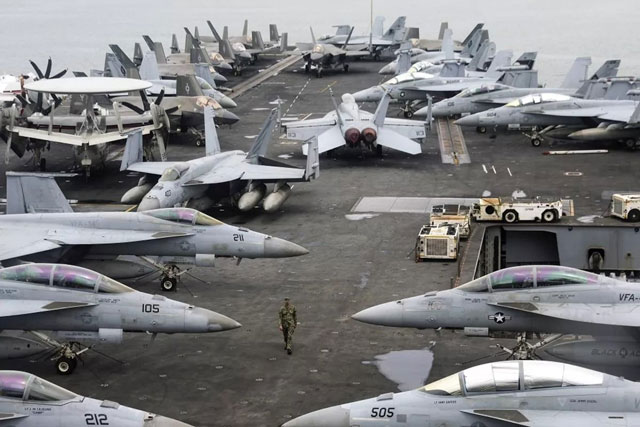
The negotiations in Geneva unfolded amid a significant American military buildup. President Donald Trump has repeatedly threatened to use force — initially in response to a deadly crackdown on protesters last month and more recently over Tehran’s nuclear activities.
Independent flight tracking data and military aviation monitors recorded several fighter aircraft heading towards the region, accompanied by refuelling planes, underscoring the scale and speed of the deployment.
Meanwhile, the aircraft carrier USS Gerald R. Ford has departed the Caribbean and is currently in the mid-Atlantic, sailing toward the Middle East, according to a Navy official who spoke to the Associated Press on condition of anonymity due to the sensitivity of ship movements. The carrier is accompanied by three guided missile destroyers — USS Mahan, USS Bainbridge and USS Winston Churchill.
Based on its current position, the carrier strike group is likely more than a week away from waters near Iran.
The USS Abraham Lincoln and other major US air and naval assets had already been deployed to the region earlier this year, further expanding Washington’s military footprint.
An American official said some progress had been made during the latest round of talks, though key issues remain unresolved. “Progress was made, but there are still a lot of details to discuss. The Iranians said they would come back in the next two weeks with detailed proposals to address some of the open gaps in our positions,” the official said.
The nearly three-hour negotiations in Geneva took place shortly after Iran announced the closure of the Strait of Hormuz for live-fire military drills. For the first time since the United States began issuing military threats against Tehran, Iran shut down sections of the strategically vital shipping corridor, heightening tensions in the region.