Multiple students rank in the national and state top 1% across four science disciplines, with two shortlisted for the Indian National Astronomy Olympiad 2026
Media Release
Mangaluru, Feb 27: The National Standard Examination (NSE), conducted by the Indian Association of Physics Teachers (IAPT), is the first and most demanding filter in India’s Olympiad pipeline; the pathway that leads to International Science Olympiads. Scoring above the Minimum Admissible Score (MAS) requires genuine conceptual depth. Reaching the national top 1% means a student’s scientific reasoning places them among the finest young minds in the country.
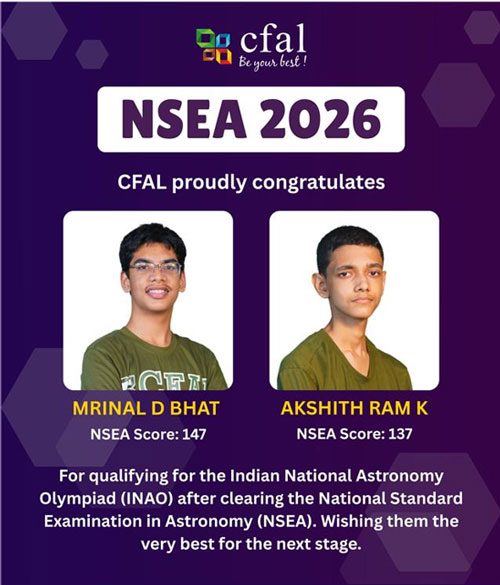
When these results come from a Tier-2 city, not from the established coaching ecosystems of Kota, Hyderabad, or Delhi, they carry a different weight. They challenge the assumption that world-class scientific talent can only emerge from metropolitan centres.
The Centre for Advanced Learning (CFAL), based in Mangaluru, Karnataka, has produced results in the NSE 2025 that demand attention, not because of volume, but because of depth.

What Stands Out
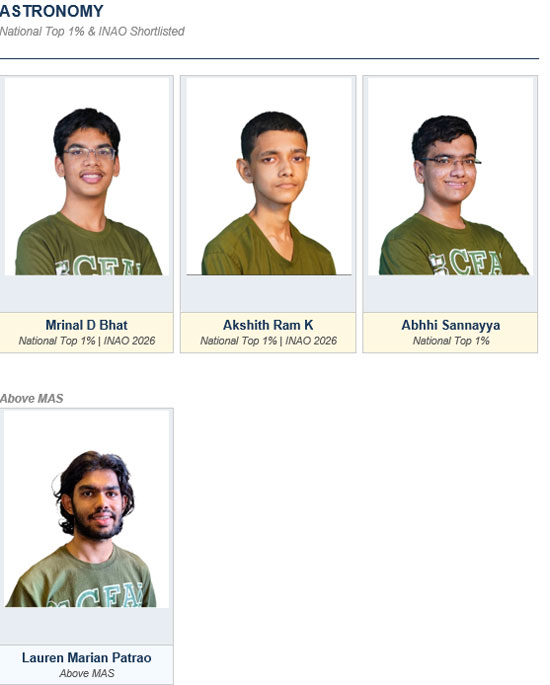
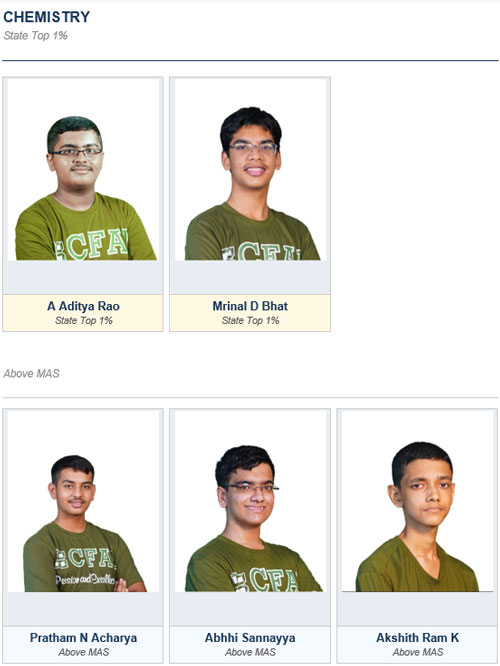
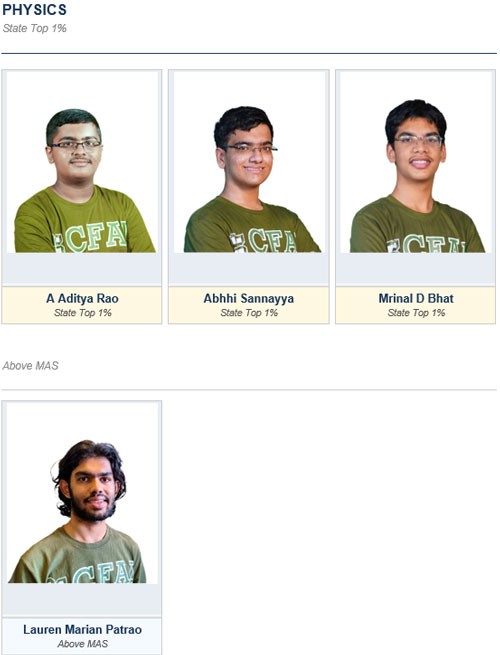
Multi-disciplinary excellence - Mrinal D Bhat achieved top 1% in three separate subjects: Astronomy (National), Chemistry (State), and Physics (State). This is not the profile of a narrowly drilled student. This is a student who thinks scientifically across domains. Similarly, Abhhi Sannayya and A Aditya Rao each achieved top 1% in two subjects.
INAO shortlisting is significant - The Indian National Astronomy Olympiad is the next stage toward the International Olympiad on Astronomy and Astrophysics (IOAA). Mrinal and Akshith are now among a select group being considered to represent India internationally.
Systemic, not accidental - When 14 students across four subjects score above MAS, and multiple students appear across subject lists, it points to something institutional: a learning environment that consistently develops scientific thinking at depth.
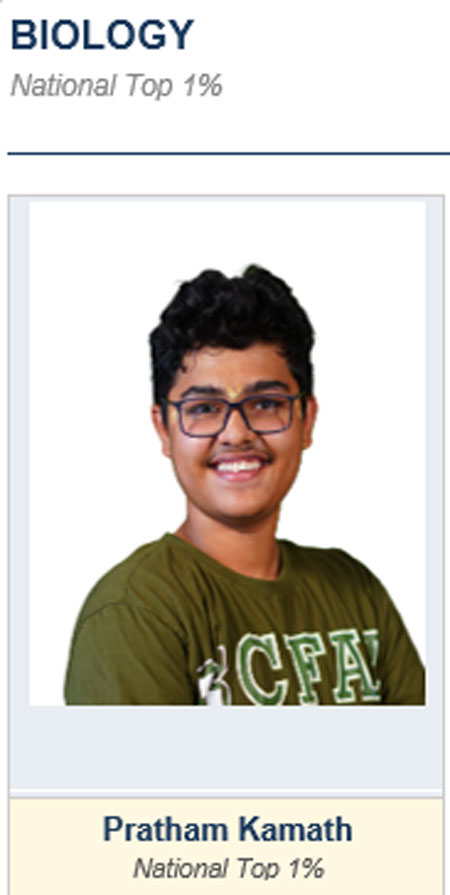
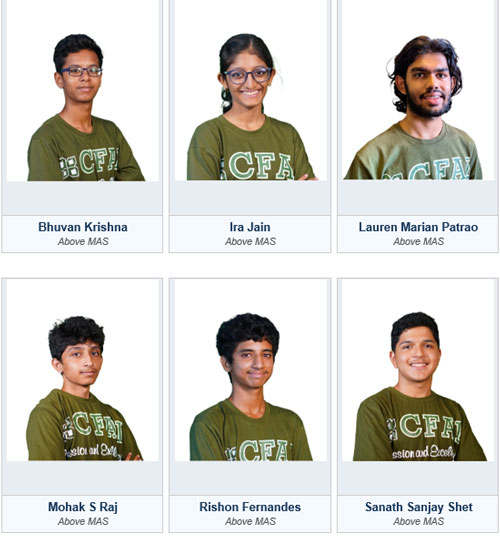
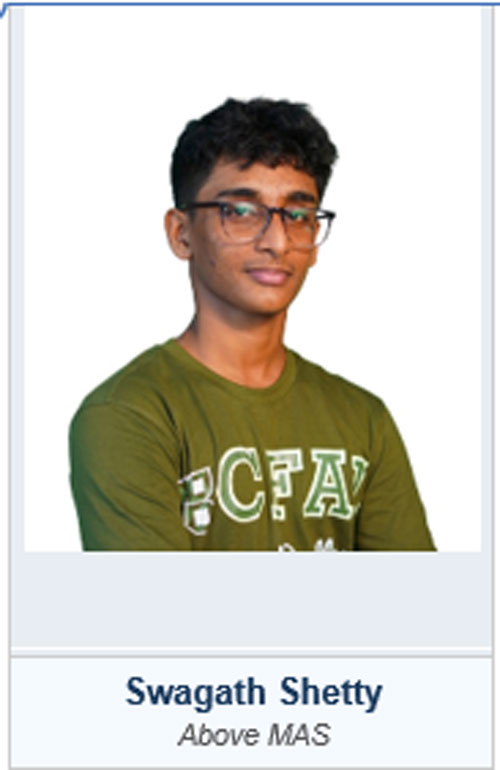
CFAL’s Achievers — Subject by Subject
The CFAL Approach: Why This Is Not Another Coaching Story

Founded in 2004 in Mangaluru, CFAL has deliberately chosen a path different from the factory model of competitive exam preparation. The institution operates with small batch sizes, emphasising conceptual depth over volume, and scientific curiosity over formulaic problem-solving.
CFAL’s philosophy, built around what it calls TLC values: Be Your Best, Passion & Excellence, Wisdom & Compassion, Purpose & Meaning, reflects a belief that genuine academic excellence is a byproduct of holistic human development. Students are encouraged to think, question, and engage with knowledge as something meaningful, not merely as material to be memorised for a test.
This is the educational philosophy that Peter Drucker described when he wrote about effectiveness – “It is not about doing more, but about doing what is right”. CFAL does not produce the largest number of exam-takers. It produces students who are genuinely prepared to think at the level the Olympiad demands.
The NSE results are not the goal of this approach, they are the evidence of it.
What This Means for Indian Education
India’s education discourse is dominated by two narratives: the mass coaching model that optimises for entrance exam ranks, and the progressive education model that sometimes struggles to demonstrate academic rigour. CFAL’s results suggest a third way: an institution that is both deeply values-driven and demonstrably excellent in the most rigorous national assessments.
The fact that this is happening in Mangaluru, not in a metro, matters. It demonstrates that with the right educational philosophy, the right teachers, and genuine institutional commitment to depth, geography need not be destiny.
As CFAL’s director Vijay Moras has articulated, the aspiration is not merely to produce top exam scores but to build an institution where academic excellence, ethical grounding, and genuine intellectual curiosity are inseparable. These NSE results are early, tangible evidence that this vision is translating into reality.