Daijiworld Media Network – Tehran
Tehran, Feb 28: Iran on Friday said the United States must drop its “excessive demands” if a deal is to be reached, tempering optimism expressed after the latest round of Oman-mediated talks seen as a last-ditch bid to avert war.
The negotiations come amid repeated threats from US President Donald Trump to strike Iran and a major American military build-up in the region. On February 19, Trump reportedly gave Tehran 15 days to reach an agreement.
While Iran has insisted that discussions focus solely on its nuclear programme, Washington is pushing for curbs on Tehran’s missile programme and its support for militant groups. The Wall Street Journal reported that the US negotiating team is expected to demand dismantling of Iran’s three main nuclear sites and the transfer of its remaining enriched uranium to the United States.
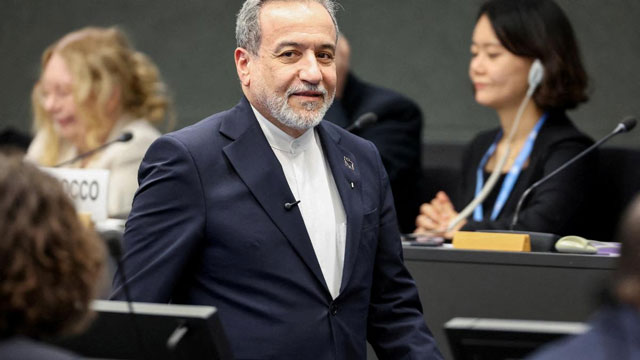
Without detailing the demands, Iranian Foreign Minister Abbas Araghchi told his Egyptian counterpart that “success in this path requires seriousness and realism from the other side and avoidance of any miscalculation and excessive demands”.
Following Thursday’s talks in Geneva, Araghchi said negotiations had “made very good progress” and entered seriously into elements of an agreement, both on nuclear issues and sanctions relief. He indicated that the next round could take place in less than a week, with technical discussions at the UN nuclear agency set to begin in Vienna on Monday.
Omani Foreign Minister Badr Albusaidi also confirmed that technical talks would be held in Vienna next week, stating that significant progress had been made. Araghchi later described the latest round as “the most intense so far”, adding that both sides agreed to engage in more detailed discussions on sanctions termination and nuclear-related steps.
A source close to the negotiations told AFP that UN nuclear chief Rafael Grossi joined the talks.
In his recent State of the Union address, Trump accused Iran of developing missiles capable of threatening Europe and US bases overseas, and of pursuing “sinister nuclear ambitions”. Tehran has consistently maintained that its nuclear programme is for civilian purposes, with the foreign ministry dismissing the allegations as “big lies”.
US Secretary of State Marco Rubio said Iran was not enriching uranium at present but was attempting to reach that stage, adding that Tehran’s refusal to discuss its ballistic missile programme posed a major obstacle.
Iranian President Masoud Pezeshkian reiterated ahead of the talks that the Islamic republic was “not at all” seeking a nuclear weapon. US Vice President JD Vance, meanwhile, expressed confidence that any potential strike would not spiral into a prolonged Middle East war.
Parallel to the talks, the United States has deployed the aircraft carrier USS Gerald R. Ford to the Mediterranean, joining USS Abraham Lincoln and other warships already stationed in the region. It is rare for two US aircraft carriers to operate simultaneously in the Middle East.
Iran has publicly stated that its missiles have a maximum range of 2,000 kilometres, though US assessments suggest they could reach up to 3,000 kilometres.
A previous negotiation effort collapsed after Israel launched strikes on Iran last June, triggering a 12-day conflict that briefly drew in the United States.
Meanwhile, domestic tensions persist in Iran. Rights groups have alleged that thousands were killed in a crackdown on nationwide protests in January, with demonstrations recently resuming at several universities.