Daijiworld Media Network – New Delhi
New Delhi, Mar 10: India has emerged as the world’s second-largest importer of major weapons with an 8.2 per cent share of global arms imports, according to the latest data released by the Stockholm International Peace Research Institute (SIPRI). War-hit Ukraine topped the list with a 9.7 per cent share of global arms imports during the latest assessment period.
Despite continuing to modernise its military capabilities amid evolving regional and global security challenges, the report notes a gradual decline in India’s defence imports alongside a rise in indigenous production.
Between 2019 and 2023, India accounted for around 9.8 per cent of global arms imports, placing it at the top of the list. However, recent estimates indicate that the share has declined to about 8.3 per cent.
The data also highlight changing patterns in India’s defence procurement. Russia continues to remain the largest supplier, accounting for nearly 40 per cent of India’s arms imports.
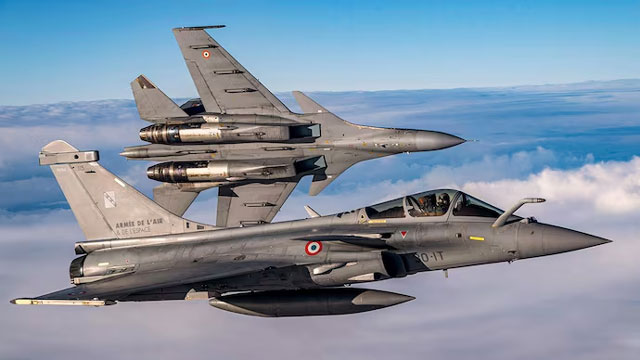
Meanwhile, France has emerged as the second-largest supplier with around 29 per cent share, largely driven by major defence deals such as the procurement of Dassault Rafale fighter jets. With India and France working on a proposal to acquire 114 more Rafale jets for the Indian Air Force, France’s share in India’s defence imports is expected to increase further.
Israel is the third-largest supplier, contributing about 15 per cent of India’s arms imports. Defence cooperation between India and Israel has expanded significantly in areas such as missiles, drones and surveillance systems.
The rise of France and Israel in India’s import mix has reduced Russia’s earlier dominance. According to earlier SIPRI analyses, Russia’s share in India’s arms imports has steadily declined from more than 70 per cent in the early 2010s as New Delhi diversified its procurement sources and strengthened defence partnerships with multiple countries.
The report reflects India’s efforts to balance the modernisation of its armed forces while pursuing self-reliance in defence manufacturing through indigenous production and technology collaborations.
Globally, the arms trade landscape has also shifted due to geopolitical tensions. Ukraine’s surge to the top position has largely been driven by massive military assistance from Western countries following its ongoing conflict with Russia.