Daijiworld Media Network – Tel Aviv
Tel Aviv, Apr 9: The announcement of a ceasefire in the Israel-Iran conflict has placed Israeli Prime Minister Benjamin Netanyahu under increasing political and strategic scrutiny, with analysts pointing to a gap between stated war goals and outcomes on the ground.
While Donald Trump declared a halt to hostilities, the response from Netanyahu’s office was notably restrained, indicating that the ceasefire decision was largely driven by Washington. This stood in contrast to more assertive claims of success from both the United States and Iran following weeks of intense fighting.
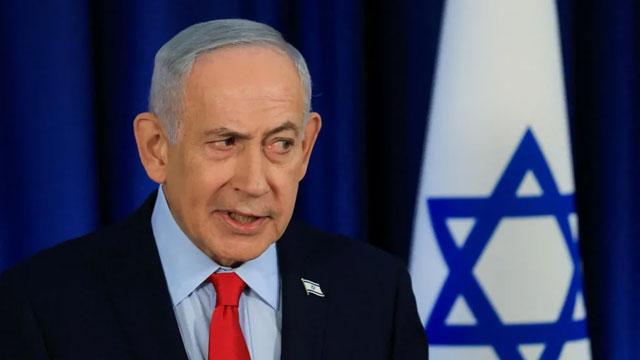
Netanyahu described the military campaign as successful but maintained that Israel’s objectives were not fully achieved and could still be pursued either through negotiations or renewed military action. At the outset of the war, he had vowed to eliminate the threat posed by Iran’s leadership and its military capabilities. However, despite significant damage, Iran’s governing structure remains intact and its military continues to operate.
The status of Iran’s nuclear programme and its stockpile of enriched uranium also remains unresolved, while missile attacks from Iran persisted throughout the conflict, raising questions over the effectiveness of the campaign.
Political observers suggest Netanyahu may have overestimated the ability of Israel and its allies to decisively weaken Iran. Analysts have also pointed to a possible divergence between Israeli and American priorities, particularly if the ceasefire framework evolves without Israel playing a central role.
Opposition leader Yair Lapid sharply criticised the government, calling the situation a “political disaster” and claiming Israel was sidelined in key decisions affecting national security. He argued that while the military performed its role, the political leadership failed to meet its own objectives.
Experts note that while Israel succeeded in damaging Iran’s military infrastructure and leadership, broader ambitions such as regime change, elimination of uranium stockpiles and halting missile capabilities remain unmet. This has made it difficult for the government to present the outcome as a clear victory to the public.
The situation is further complicated by disagreements over whether the ceasefire extends to Lebanon, where Israel continues operations against Hezbollah. Israeli authorities have clarified that Lebanon is not covered under the truce, even as international voices call for a broader de-escalation.
With elections approaching, the developments pose a significant political challenge for Netanyahu, as questions grow over strategy, coordination with allies and the overall outcome of the conflict.