Daijiworld Media Network - Washington
Washington, Apr 17: The US House of Representatives early Friday approved a short-term extension of a key intelligence surveillance program until April 30, following a late-night political standoff marked by Republican divisions and opposition to President Donald Trump’s push for a longer renewal.
The measure relates to Section 702 of the Foreign Intelligence Surveillance Act (FISA), a provision that allows US intelligence agencies, including the CIA, NSA and FBI, to collect and analyse foreign communications without a warrant, though it may incidentally involve US citizens.
Lawmakers were called back to the Capitol in a post-midnight session after an earlier attempt to pass a broader extension collapsed when a key procedural vote failed due to Republican defections.
A revised proposal, introduced late Thursday, had sought a five-year extension with modifications, deviating from Trump’s demand for a clean 18-month renewal. The push ultimately failed amid bipartisan disagreement and internal GOP resistance.
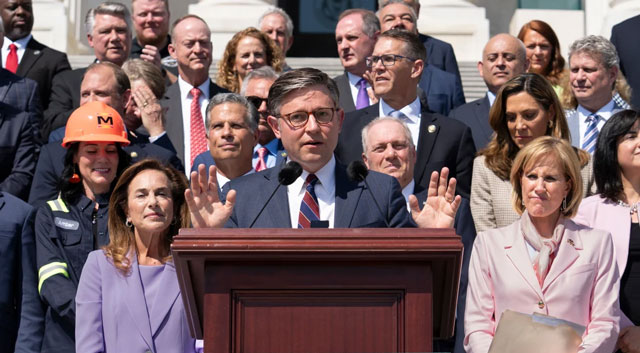
House Speaker Mike Johnson said the chamber came “very close” to passing the measure, as negotiations continued between lawmakers and the White House.
The debate saw sharp exchanges on the House floor, with Democrats criticising the rushed process and lack of clarity on the bill’s contents. Representative Jim McGovern questioned lawmakers during the session, saying, “Does anybody actually know what the hell is in this thing?”
The surveillance authority has long been at the centre of controversy in the US, balancing national security requirements against concerns over civil liberties and privacy protections.
While intelligence officials argue that Section 702 is vital for countering terrorism, cyber threats and foreign espionage, critics have repeatedly raised concerns over the incidental collection of Americans’ communications without a warrant.
President Trump had urged Republicans to support a clean renewal of the program, warning against internal divisions that could weaken national security efforts. The House is expected to revisit the matter ahead of the April 30 deadline.