Daijiworld Media Network – Kathmandu
Kathmandu, May 28: Nepal has reported measles outbreaks in seven districts since January, raising concerns among health experts as neighbouring Bangladesh continues to battle a severe outbreak that has reportedly claimed over 500 children’s lives.
According to Nepal’s Immunisation Section under the Family Welfare Division, outbreaks have been recorded in Sarlahi, Baglung, Mahottari, Kalikot, Dailekh, Achham and Siraha districts.
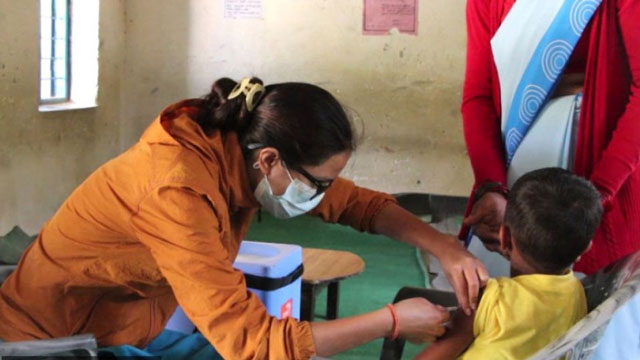
Officials said more than 300 children have been infected so far, including over 200 cases in Baglung district alone. However, no deaths have been reported in Nepal till date.
Health authorities admitted that emergency vaccination drives have remained limited due to vaccine shortages. Ring vaccination campaigns were conducted only in Sarlahi district and Dhorpatan Municipality of Baglung district despite outbreaks being reported in multiple areas.
Officials said every child in affected areas should ideally receive emergency vaccination, but inadequate vaccine stock prevented a wider response.
The Health Ministry recently received 200,000 doses of measles vaccine from an international aid agency months after requesting emergency supplies.
“We are now deciding where to administer these vaccines, as the quantity is insufficient to cover all outbreak-hit areas,” said Dr Abhiyan Gautam, chief of the Immunisation Section.
Health experts warned that Nepal remains vulnerable to a major measles outbreak due to low immunisation coverage, weak preparedness and shortage of emergency vaccine stocks.
Officials also pointed to the worsening measles situation in Bangladesh, where disruptions in routine immunisation reportedly triggered a massive outbreak following political instability last year.
According to health officials, Nepal currently lacks adequate vaccine buffer stock and does not have a dedicated emergency budget for outbreak response.
Former Director General of the Department of Health Services Dr Shyam Raj Upreti said the government cannot ignore its responsibility towards protecting children from preventable diseases.
“The government must ensure timely vaccine supply and strengthen outbreak response mechanisms,” he said.
Experts identified low vaccination coverage, poor awareness, migration and gaps in healthcare delivery as major reasons behind recurring measles outbreaks in Nepal.
Measles is a highly contagious viral disease spread through respiratory droplets and can be fatal, especially among unvaccinated children, pregnant women, elderly people and those with weak immunity.
The disease can be prevented through a two-dose vaccine administered at nine months and 15 months of age, which is provided free of cost through government health facilities.
Nepal had aimed to eliminate measles by 2026 after reporting no outbreaks since June 2023. However, recent outbreaks have affected the country’s progress towards that target.