Daijiworld Media Network – New Orleans
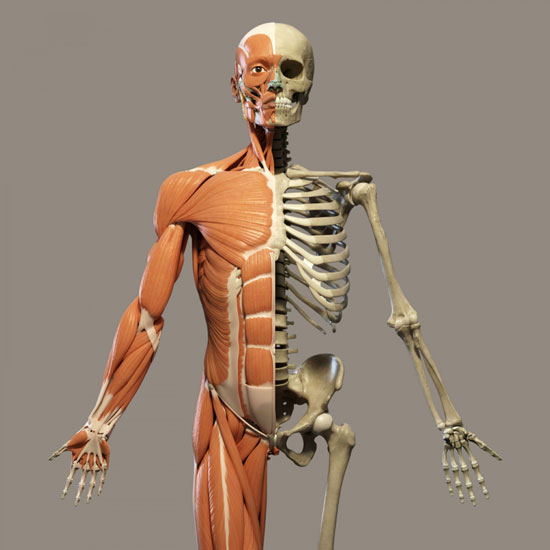
New Orleans, Jul 7: Researchers have created one of the most comprehensive spatial maps showing how bone and skeletal muscle communicate at the cellular level, a breakthrough that could pave the way for improved diagnosis and treatment of musculoskeletal disorders, osteoporosis and age-related muscle loss.
The study, led by Professor Hong-Wen Deng, Director of the Tulane Center for Biomedical Informatics and Genomics at the School of Medicine, Tulane University, used advanced spatial transcriptomics technology to examine gene activity within intact tissue from a young mouse. The findings were published in Bone Research on May 19, 2026.
Unlike conventional genomic techniques, which identify genes but lose information about where they are active, spatial transcriptomics preserves the location of cells within tissues. This enabled researchers to map molecular interactions between bone and neighbouring skeletal muscle with unprecedented precision.
Using spatial transcriptomics, computational deconvolution and ligand-receptor network analysis, the team reconstructed communication networks across the bone-muscle interface. The analysis covered 2,660 spatial spots and identified multiple major cell populations involved in maintaining tissue health.
The researchers found that bone and muscle are connected through a highly organised communication network involving osteoblasts, skeletal muscle cells, endothelial cells, immune cells and stem-cell populations. They identified 13 major signalling pathways responsible for coordinating tissue maintenance, remodelling and vascular support.
Among the key discoveries were ligand-receptor pairs that function as molecular messengers between neighbouring cells. These included collagen-related signalling between osteoblasts and muscle cells, thrombospondin-mediated communication involving immune cells, tenascin pathways and vascular endothelial growth factor (VEGF)-driven signalling that supports blood vessel function.
Laboratory imaging confirmed several of the predicted molecular interactions, while additional validation using independent mouse and human datasets suggested that many of the signalling pathways are conserved across species.
"Our goal was to move beyond simply identifying which genes are present and instead understand how cells communicate within their native tissue environment," Prof. Deng said. "By preserving spatial information, we were able to uncover communication networks that would be difficult to detect using conventional sequencing approaches alone."
The researchers believe the findings could accelerate studies on disorders such as osteoporosis, sarcopenia and metabolic diseases, where both bone and muscle deteriorate simultaneously. A better understanding of tissue crosstalk may help scientists identify common therapeutic targets and develop more effective treatments.
"Understanding these cellular communication pathways gives us a framework for studying what goes wrong in musculoskeletal disorders," Prof. Deng said. "In the future, this knowledge may help guide the development of targeted interventions that restore healthy communication between tissues."
The team said the newly developed spatial transcriptomic map will serve as a valuable reference for future research into how bone-muscle communication changes during ageing, injury and disease progression, potentially contributing to more precise diagnostics, regenerative therapies and personalised treatments aimed at preserving mobility and quality of life.