Daijiworld Media Network – New Delhi
New Delhi, Jul 13: India has declined to rush into an interim trade agreement with the United States, opting instead to hold out for more favourable terms as Prime Minister Narendra Modi's government draws confidence from expanding trade partnerships, improving economic indicators and a stronger domestic political position, according to officials and trade analysts.
After months of negotiations, India and the US failed to finalise an interim trade pact during the visit of US Trade Representative Jamieson Greer to New Delhi last month, despite expectations on both sides that a limited agreement could be reached.
According to an Indian government official familiar with the negotiations, the talks failed to produce a consensus because Washington did not provide assurances on New Delhi's key demands, including tariff advantages over competitors such as China and guarantees against additional US tariffs after the agreement comes into force.
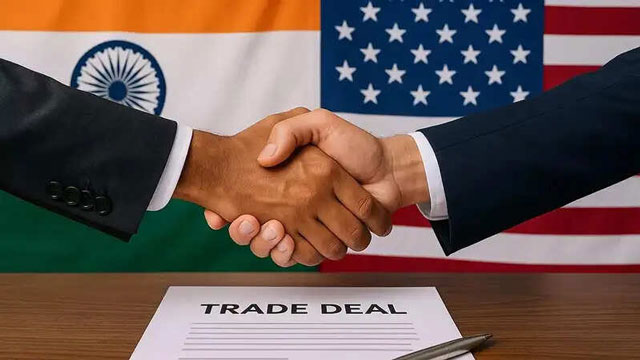
"Our position is clear – we don't intend to rush into a deal that is not on favourable terms or compromise on red lines like ceding ground on agriculture," the official said.
Officials and analysts said Washington had expected swift trade concessions from India as US President Donald Trump prepares to impose a fresh round of tariffs later this month. India's decision to hold out could expose its exports to higher duties and prolong uncertainty for businesses.
A day after the talks with Greer, Union Commerce and Industry Minister Piyush Goyal said any agreement with the US would be implemented only if it ensured an advantage for India, signalling New Delhi's tougher negotiating stance despite the possibility of higher tariffs.
At present, most Indian exports to the US attract a 10 per cent tariff. However, the Trump administration is expected to introduce steeper tariffs later this month following investigations into alleged excess industrial capacity. India has rejected the US allegations of surplus production capacity.
Washington has also proposed additional tariffs of up to 12.5 per cent on goods from dozens of countries, including India, over allegations that they failed to curb trade in products made using forced labour.
A US source familiar with the negotiations said Washington believes India must earn the preferential trade treatment it seeks by offering greater concessions of its own.
Both the Indian official and the US source spoke on condition of anonymity as the negotiations remain confidential. India's Ministry of Commerce and Industry and the Office of the United States Trade Representative did not respond to requests for comment.
A separate US official, also speaking anonymously, said Washington remained engaged with India and continued to expect an agreement, although no timeline was provided. The official added that negotiations with India had at times been slow, bureaucratic and challenging, suggesting that a quick breakthrough was unlikely.
Responding to questions on the stalled talks, White House spokesman Kush Desai said the Trump administration continued to engage constructively with Indian officials to finalise what he described as a historic trade agreement that would put "Americans and America First."
Trade analysts said India's improving economic outlook has strengthened its negotiating position. The country's overall merchandise exports rose about 15 per cent year-on-year during the April-June quarter despite disruptions caused by the conflict involving Iran, supported largely by higher-value petroleum exports.
Exports to Gulf nations recovered to pre-conflict levels, increasing to USD 5.3 billion in May from USD 2.62 billion in March as exporters adopted alternative shipping routes. Exports to the United States also increased to USD 17.29 billion during April and May.
India is simultaneously expanding access to other major markets. A free trade agreement with the United Kingdom is expected to come into effect this month, while a trade pact with the European Union is anticipated by early next year.
Wendy Cutler, Senior Vice-President of the Washington-based Asia Society Policy Institute and a former US trade official, said India's strong economy, efforts to diversify trade partnerships and growing strategic importance had given its negotiators greater leverage.
Goldman Sachs economist Santanu Sengupta said the interim peace agreement between the US and Iran had improved India's economic outlook by easing oil prices. The investment bank has raised its 2026 growth forecast for India to 6.8 per cent while lowering its inflation and current account deficit projections, giving New Delhi greater flexibility to negotiate for better terms.
A weaker rupee has also improved the competitiveness of Indian exporters.
Another Indian official said New Delhi is also calculating that some proposed US trade measures could face legal or political challenges. A coalition of 22 Democratic state attorneys general has already filed objections to the Trump administration's proposed tariffs linked to forced labour investigations.
Trade analysts said the legal uncertainty surrounding the proposed US tariffs, combined with Modi's recent electoral victories in state polls, has enabled India to resist pressure for a hurried agreement.
Senior leaders of the Bharatiya Janata Party have publicly maintained that any trade deal must safeguard the interests of Indian farmers and small businesses, two influential constituencies that India has consistently sought to protect during trade negotiations.
Ajay Srivastava, founder of the Global Trade Research Initiative and a former trade negotiator, said India believes delaying—or even walking away from—a rushed agreement may be wiser than accepting commitments whose long-term costs could outweigh any short-term tariff relief.