Daijiworld Media Network – Washington
Washington, Jul 22: US President Donald Trump has ruled out the possibility of immediate negotiations with Iran, saying Washington has "no interest" in talks until Tehran is prepared to engage in meaningful discussions.
Speaking alongside Lebanese President Joseph Aoun at the White House, Trump claimed Iranian officials were attempting to initiate back-channel communications with the US but said the administration would not enter into discussions under the current circumstances.
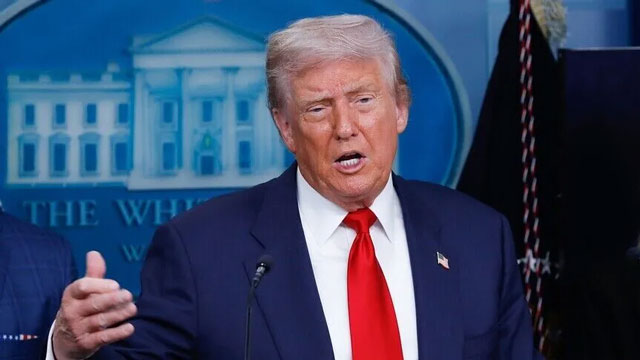
"I will tell you, they want to desperately meet. And until they're ready to meet in a meaningful way, we have no interest in meeting," Trump told reporters in the Oval Office.
He further claimed that Iranian officials had conveyed through informal channels that they were eager to resume dialogue as they were "getting decimated."
The remarks come amid escalating hostilities between the United States and Iran, with both countries continuing military operations after the collapse of an interim agreement aimed at ending the conflict.
Meanwhile, Iranian President Masoud Pezeshkian said communication with Supreme Leader Ayatollah Ali Khamenei had intensified in recent days. Addressing the National Industry and Mining Day ceremony, Pezeshkian said government actions were being carried out in line with the Supreme Leader's directives and reaffirmed Iran's commitment to continue its current course.
On the military front, the US launched its 11th consecutive night of airstrikes on Iranian targets early Wednesday. The US Central Command (CENTCOM) said the strikes targeted military infrastructure to further weaken Iran's ability to threaten commercial shipping through the Strait of Hormuz, one of the world's most critical maritime trade routes.
"CENTCOM forces began striking military targets in Iran at 7 pm ET today for the 11th consecutive night. The strikes are designed to continue degrading Iran's ability to threaten commercial shipping in the Strait of Hormuz," the command said in a statement.
The latest attacks came as diplomatic efforts to revive a collapsed ceasefire remained stalled, raising fears of a prolonged conflict in West Asia.
US Defense Secretary Pete Hegseth told Congress that the war has so far cost the United States an estimated USD 37.5 billion, up from an earlier estimate of nearly USD 29 billion in May. Defending a request for USD 67 billion in supplemental Pentagon funding, Hegseth described the additional allocation as "urgent and necessary" to sustain military operations and prevent critical shortfalls.