Daijiworld Media Network - New Delhi
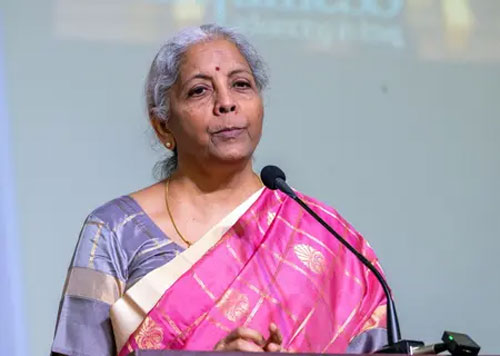
New Delhi, Jul 31: Union Finance Minister Nirmala Sitharaman on Friday congratulated Hyderabad-based space startup TakeMe2Space after its PowerBank-50 became India's first indigenously developed satellite battery to achieve flight heritage status.
Reacting to the milestone on social media platform X, Sitharaman wrote, "Brilliant! Until now, Indian satellite builders mostly had to import this critical component at high cost and long waiting times."
The achievement came after the successful deployment of the PowerBank-50 aboard Skyroot Aerospace's Vikram-1 rocket during its maiden mission, Aagaman, launched on July 18.
The battery powered Cosmoserve Space's experimental payload on the rocket's Orbital Adjustment Module at an altitude of 450 km and performed successfully throughout the mission.
According to TakeMe2Space, the successful orbital performance has earned the battery the flight heritage tag, a key qualification in the space sector that confirms a component's reliability after operating in actual space conditions.
The company said the certification is expected to increase confidence among satellite manufacturers, launch service providers and insurers, who generally prefer space hardware with proven flight experience.
TakeMe2Space said the battery pack incorporates high-energy-density lithium-ion cells, an intelligent battery management system, integrated cell heaters and a lightweight aluminium enclosure designed to withstand launch vibrations, radiation exposure, vacuum conditions and extreme temperature changes in space.
The startup said the development will help reduce India's dependence on imported satellite batteries, which are often costly and require long procurement timelines.
A domestically developed and flight-proven power system is expected to support India's expanding small satellite ecosystem and make satellite development more affordable for startups, research organisations and universities.
TakeMe2Space said the compact battery can store more than 50 watt-hours of energy, weighs around 380 grams and is designed to power CubeSats and microsatellites for missions lasting up to five years in low-Earth orbit.