Quick Summary
- Smart manufacturing runs on accurate, uninterrupted data. No exceptions.
- Advanced instrumentation cables keep signals clean in some of the toughest industrial environments out there.
- Gulf manufacturers are pouring money into automation, digital monitoring, and connected operations.
- The right cable infrastructure cuts downtime, supports real-time decisions, and keeps operations running the way they should.
- Cable selection and installation matter more than most people realise. Get them right from the start.
Manufacturing across the Gulf is changing fast.
Smart manufacturing depends on a constant exchange of information. Sensors, controllers, monitoring systems, and industrial networks, they're all in a continuous conversation. Every production decision, every quality check, every process adjustment depends on accurate data getting where it needs to go without interruption.
Technologies like Industrial IoT, predictive maintenance, and advanced analytics tend to grab the headlines. But the physical foundation that makes them work? That's often overlooked. That's where instrumentation cables come in.
Why Reliable Data Transmission Matters in Smart Manufacturing
Traditional manufacturing environments often had processes running independently. Smart manufacturing changes that entirely. Equipment, sensors, and control systems work together continuously, and that level of integration creates real opportunities for efficiency. But it also introduces new challenges.
Data delays. Signal interference. Communication failures. Any of these can affect production accuracy and knock your operations off track.
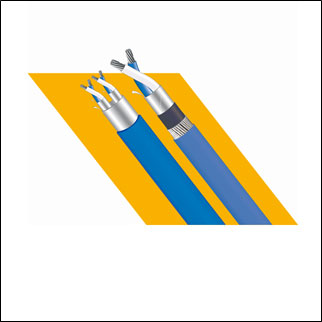
Advanced instrumentation cables are built specifically to transmit low-level signals accurately in environments where electrical noise, vibration, moisture, and temperature swings are just part of the job. Their ability to preserve signal quality gives manufacturers confidence in the data driving their critical decisions.
The Benefits of Advanced Instrumentation Cables in Smart Manufacturing
Improved Signal Integrity
Motors, drives, transformers, and power equipment, they all generate electromagnetic interference that can corrupt the data your systems depend on.
High-quality instrumentation cables include shielding and screening that reduce this interference and keep signals accurate. That means measurements from sensors and field devices actually reach your control systems the way they're supposed to.
Better Operational Efficiency
Smart manufacturing is built on visibility. For plant operators and production teams, good decisions start with good information. When the information coming from equipment can't be fully trusted, problems tend to show up pretty quickly. Sometimes it's a missed warning sign. Sometimes it's a production slowdown that nobody saw coming. And in some cases, teams end up spending time and money checking equipment that was actually working fine all along.
That's why steady, dependable communication between systems matters more than many people realise.
Think about a busy production facility. Operators are watching multiple processes at once, maintenance teams are tracking equipment performance, and supervisors are trying to keep everything running on schedule. When signals are transmitted clearly and consistently, it's much easier to spot unusual patterns, react to developing issues, and make decisions with a bit more confidence instead of relying on guesswork.
A small fault caught early is usually manageable. Left unnoticed for hours or days, though, that same issue can turn into downtime, product quality problems, or repairs that cost far more than anyone expected.
Supporting Modern Automation
Automation depends on constant communication. Every controller, sensor, drive, and monitoring device has a job to do, but they also need to "talk" to each other all the time.
If that communication becomes unreliable, the entire process can suffer.
Modern manufacturing facilities often run around the clock with very little manual involvement. In highly automated facilities, reliable connectivity isn't something teams hope for. They already expect it to be there every single day.
If communication becomes inconsistent, even for a short period, operators can find themselves chasing problems that are difficult to pinpoint, while production targets start slipping in the background.
It's one of those things people rarely talk about when everything is working properly.
But when the underlying cable network is dependable, data reaches the right systems when it's needed, automated processes keep running as expected, and teams can focus on production instead of troubleshooting communication issues.
Scalability for Future Expansion
Most manufacturers across the Gulf aren't doing a complete facility overhaul overnight. They're rolling out smart technologies in phases, which means the infrastructure choices made today need to hold up for what's coming.
Well-designed instrumentation cables let facilities expand monitoring systems, add sensors, and connect new automation technologies without ripping out and replacing what's already there.
Smart Manufacturing Growth Across the Gulf
The Gulf region is investing heavily in industrial modernisation. Governments and private organisations are pushing advanced manufacturing capabilities to strengthen economic diversification and stay competitive globally.
Oil and gas, petrochemicals, power generation, water treatment, pharmaceuticals, and food processing sectors across the board are bringing in digital technologies to improve productivity and build operational resilience.
As facilities get more connected, data reliability becomes a strategic concern. Advanced analytics, predictive maintenance programs, remote monitoring systems are only as effective as the information they receive. If that information is delayed or distorted, the whole system suffers.
That's why more organisations are paying closer attention to infrastructure components that used to be treated as routine purchases. Choosing the right instrumentation cables is now part of a broader strategy for long-term digital transformation.
Wrapping Up
Many manufacturers across the Gulf are continuing to invest in newer technologies, larger production capabilities, and more connected facilities. As those investments grow, the supporting infrastructure behind them becomes harder to overlook. A factory can have advanced equipment and sophisticated monitoring tools, but if communication between those systems becomes unreliable, day-to-day operations can get frustrating pretty quickly.
That's one reason companies like Tempsens remain involved in industrial projects throughout the region. Their cable solutions are built for environments where machinery often runs around the clock, conditions aren't always predictable, and communication links are expected to perform consistently over long periods.
It's not usually the first thing people notice when they walk through a manufacturing facility. Truthfully, most people never think about cable infrastructure unless there's a problem. But avoiding those problems in the first place is often what makes the difference between a smooth operation and an expensive interruption that nobody planned for.