Daijiworld Media Network - New Delhi
New Delhi, Aug 16: A day after Chief Justice of India Surya Kant strongly criticised the Bar Council of India (BCI) for intervening in the NALSAR University of Law enrolment controversy, BCI chairman Manan Kumar Mishra on Saturday apologised to law students, saying he sincerely regretted if any of his words or correspondence had hurt their feelings.
In an Independence Day letter addressed to “my dear young friends”, Mishra said the developments of the past few days had caused “concern and anguish” among a section of students. He acknowledged that whenever students felt hurt or aggrieved, their concerns deserved to be heard with “patience, sensitivity and respect”.
“If anything connected with the present controversy, any of my words, or letter, has hurt the feelings of our law students, I sincerely regret and apologise for the same,” Mishra said.
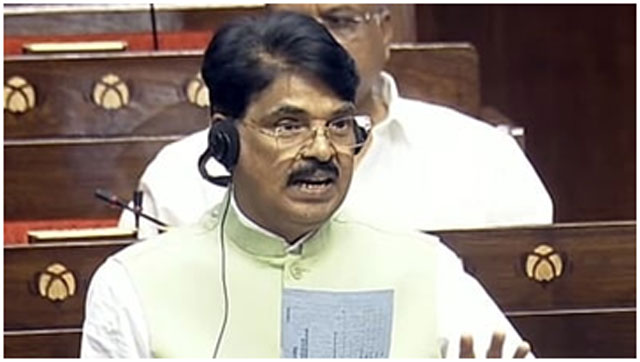
“There should be no hesitation in saying so. An expression of regret is not a matter of prestige or ego. It is simply an acknowledgment that the feelings and concerns of our students matter,” he added.
The apology came a day after CJI Kant told the BCI that it had “no business” interfering in the NALSAR controversy. He also made it clear that students had the right to protest as long as their demonstrations remained lawful and peaceful.
The bench headed by CJI Kant and comprising Justices Joymalya Bagchi and V Mohana restrained the BCI and all state bar councils from pursuing any punitive or criminal action against students and faculty members of national law universities or other universities in connection with the controversy.
The Supreme Court's intervention followed the BCI's dramatic reversal over the enrolment of NALSAR University's 2026 graduating batch in Hyderabad.
On Thursday, the BCI had initially directed all state bar councils not to enrol the students “till further orders”. Hours later, it withdrew the freeze but retained an inquiry into allegations that some teachers and outsiders had instigated or misled students. On Friday, Mishra announced that proceedings against the entire 2026 batch were being closed.
In his latest letter, Mishra sought to put an end to the controversy by stressing that law students must remain free to form their own views.
“Our law students, particularly those studying in the National Law Universities and other leading Centres of Legal Education, are among the most informed and discerning young citizens of the country,” he said.
He added that students study the Constitution, the Rule of Law, fairness and the importance of hearing all sides before reaching a conclusion, and “do not require anyone to decide for them”.
Mishra also underlined the importance of dissent, saying peaceful disagreement, questioning and protest were “important features of a constitutional democracy” and that students “must always remain free to express their views”.
At the same time, he said issues could be reconsidered when further facts or clarifications emerged.
“There is no inconsistency between expressing a genuine grievance and thereafter fairly considering a clarification,” he said.
Addressing the NALSAR convocation controversy, Mishra said the decision on whether to attend the event must ultimately remain with the students.
“No student should be compelled to attend, and no student should feel compelled to abstain,” he said, while appealing to students to make an independent decision after considering the matter in its entirety.
The controversy erupted after a section of NALSAR students objected to CJI Kant being invited as the chief guest for their convocation this year.
The students had cited remarks made by CJI Kant during proceedings concerning alleged police excesses during student protests in Delhi. They questioned whether his invitation was consistent with NALSAR's commitment to constitutional rights, access to justice and reasoned engagement with grievances.
The BCI subsequently sought an authenticated report from NALSAR identifying those who had initiated, organised, coordinated or mobilised the campaign opposing CJI Kant's participation in the convocation.
The intervention triggered a backlash and eventually came up before the Supreme Court on Friday.
When senior advocate K Parameshwar mentioned the matter, CJI Kant said the BCI was “unnecessarily taking action” and asserted that students had a right to protest if they had a cause or reason to do so.
“Nobody can stop them and we will not allow this,” the CJI said.
Drawing upon his own experience of student activism, CJI Kant said that as long as students protested lawfully and peacefully, they had the right to raise their voice.
“We have to be large-hearted. They should be allowed to speak. Even if they are wrong, they have a right to speak,” he said.
The bench also questioned whether the BCI Council had actually been convened to take the decision concerning the NALSAR students and directed the council to explain the process in its response to the court.
Mishra's Saturday letter now seeks to shift the focus towards reconciliation rather than confrontation.
“The relationship between the Judiciary, the Bar, Universities and law students is much deeper and more enduring than any temporary controversy,” he said, adding that differences should ultimately be resolved through “dialogue, clarification and mutual respect”.
Mishra said the BCI regarded law students as the future of the legal profession and that their “dignity, independence of thought and legitimate concerns must always be respected”.
He also appealed against allowing the controversy to acquire a “political or extraneous colour through outside influence”. He said students were mature enough to examine the facts, consider the clarification offered and take their own independent decision.
“Let the students examine the matter themselves. Let every institution respect their independence of thought,” he said.