Daijiworld Media Network - Mumbai
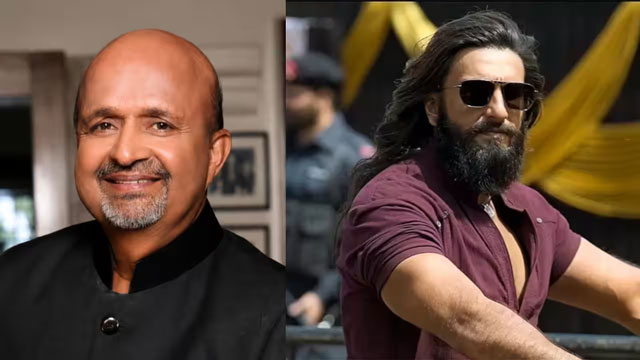
Mumbai, Sep 15: Veteran lyricist Sameer Anjaan has criticised the declining importance of music in Bollywood and questioned the use of old songs in violent sequences, particularly in Ranveer Singh-starrer Dhurandhar.
Speaking to Komal Nahta on his YouTube podcast Game Changers, Sameer said songs in contemporary films often lack emotional depth and alleged that filmmakers were increasingly focusing on sex and violence while sidelining music.
"Songs today don't have meaning because the people today don't have emotions and depth left in them," he said, adding that cinema often reflects society.
Recalling his experience of writing the title track for Kuch Kuch Hota Hai, Sameer said director Karan Johar had given him a detailed narration lasting more than six hours, including details about what Shah Rukh Khan and Kajol would wear during the song sequence.
He attributed the decline in attention to music partly to the entry of corporate culture into filmmaking. According to Sameer, producers now often approach lyricists without providing adequate context and ask them for a "hit song".
He questioned how quality music could emerge when a film has multiple music directors and numerous songwriters without sufficient collaboration and context.
On the growing trend of recreating older songs, Sameer said there were both advantages and disadvantages but stressed that the practice should have limits.
He cited the recreation of his song Dilbar as an example of how an old song could be introduced to a younger generation. However, he criticised instances where the original lyricist is ignored despite being available and new lyrics are added that, according to him, have no connection with the original work.
"If you can improve something, please do. But don't play with something to spoil the original," he said.
Sameer also argued that established creative works should not be altered without the permission of their original writers and said the industry should stop assuming that older lyricists are disconnected from contemporary audiences.
He specifically criticised Dhurandhar for using old songs as background music during violent action sequences.
"Films like Dhurandhar have made the situation even worse. Satyanash kar diya. They picked the music and put it in the background," he said.
Referring to the Chauhan trailer, he questioned the use of Jumma Chumma during an action sequence involving gunfire.
"Where is the song?" he asked, expressing concern that such treatment could eventually damage the value of classic Bollywood music.
Sameer also expressed disappointment with major production houses owned by Aditya Chopra and Karan Johar, saying they had once played an important role in promoting good music but no longer appeared to give it the same attention.
The Dhurandhar franchise, despite receiving mixed reviews, has reportedly earned more than Rs 3,000 crore collectively from its two films.
Sameer further criticised the industry's tendency to replace experienced professionals with younger talent, while making it clear that he did not consider young artistes to be lacking in talent.
Recalling a conversation with an acquaintance in the music industry, he said the person had hired young employees and that the company had not produced a major hit in around six years. Sameer said the ideal approach would be to combine the experience of older professionals with the talent and energy of younger artistes.
Citing his own work with Sachin-Nigam, he said he had written the popular song 4 Baj Gaye Lekin Party Abhi Baki Hai to demonstrate that experienced lyricists could also create music that connected with younger audiences.
Sameer also linked the industry's growing monotony to singer Arijit Singh's decision to distance himself from mainstream music. He said the singer had become frustrated with the repetitive nature of songs and tunes and could not find enough variety in the industry.
He contrasted the current situation with earlier singers such as Udit Narayan, whom he said had the opportunity to sing a wide variety of songs.