Daijiworld Media Network - Geneva
Geneva, Oct 10: World Health Organisation (WHO) Director-General Tedros Adhanom Ghebreyesus on Saturday reported significant progress in the Ebola response in the Democratic Republic of the Congo (DRC), with 25 survivors discharged from a treatment centre in Isiro, while warning that the epidemic was slowing in some areas but continuing to spread in others.
“There continues to be strong progress in the Ebola response in the DRC,” Tedros said in a post on X.
He said 25 survivors of Bundibugyo virus disease (BVD), including 13 women and 12 men, were discharged on Friday after receiving treatment at a WHO-supported Ebola Treatment Centre in Isiro, the capital of Haut-Uele province.
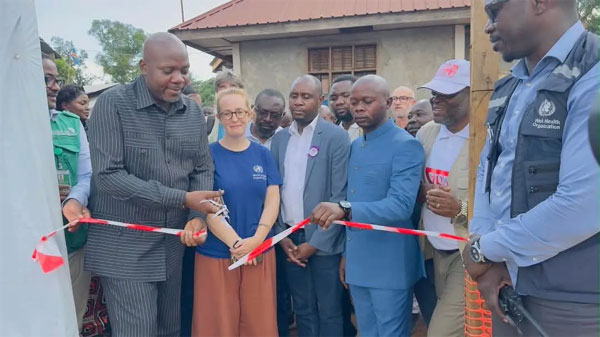
A 10-bed extension to the centre, inaugurated with WHO support in collaboration with Médecins Sans Frontières (MSF), has increased its capacity to 50 beds.
“The Centre strengthens patient care while allowing the Isiro General Referral Hospital to keep delivering other essential health services,” Tedros said.
The WHO has also supplied more than one tonne of medical supplies to the Isiro hospital, including oxygen-related materials, gloves and masks for healthcare workers, as well as beds and mattresses.
Tedros said the organisation had trained 211 health workers at its clinical training hub in Bunia, the capital of Ituri province, and would soon open a new centre in North Kivu.
Providing an update on vaccination efforts, the WHO chief said the first 100 frontline health workers in Haut-Uele province received the ERVEBO vaccine on Friday under the DRC government's vaccination programme.
The vaccine is proven to protect against the Ebola Zaire strain and is also being studied to determine its effectiveness against Bundibugyo virus disease, which is driving the current outbreak. More than 9,000 frontline workers have so far received the ERVEBO vaccine as part of the effort, he said.
MSF and its partners have also vaccinated at least 870 frontline workers with ERVEBO under the “BRAVO” study, which is assessing the vaccine's impact on preventing severe disease and deaths caused by the Bundibugyo virus.
Meanwhile, the WHO is supporting a vaccine efficacy platform trial involving both ERVEBO and vaccines specifically developed for Bundibugyo virus disease. The trial is expected to begin in the coming weeks, Tedros said.
“While there are clear signs that the epidemic is slowing down in some areas, it is still growing in others. It is therefore critical that the response continue to scale up and reach where the outbreak already is and where it might be going,” he said.
Tedros added that the WHO was supporting the DRC government and its partners in efforts to bring the outbreak under control as quickly as possible, while strengthening regional health services to protect communities against future outbreaks.