Daijiworld Media Network - New Delhi
New Delhi, Nov 2: As smart rings and screenless fitness bands gain popularity, competition in the wearable technology market is increasingly shifting from hardware to companion applications that transform collected health data into personalised insights.
According to market intelligence firm Sensor Tower, companies such as WHOOP and Oura are placing greater emphasis on mobile applications that help users understand information related to sleep, physical activity, heart rate and recovery, rather than simply displaying individual health measurements.
The trend reflects a broader transformation in the wearable industry, where manufacturers are moving beyond data collection towards providing meaningful information that users can apply in their daily lives. Artificial intelligence (AI) is playing an increasingly important role in this shift by identifying patterns and offering insights into sleep, stress, fitness and recovery.
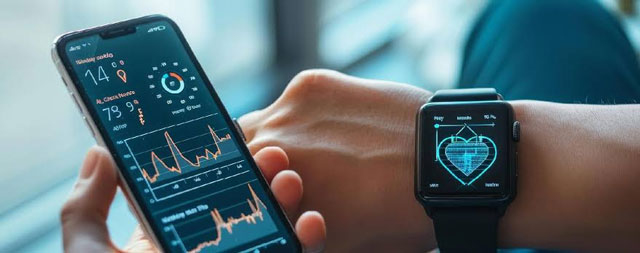
For manufacturers of screenless devices, the companion application has become particularly important as it serves as the primary interface through which users access information recorded by their wearables. Companies are therefore focusing on developing applications that encourage regular engagement and provide sufficient value to retain customers over the long term.
Oura follows a hybrid business model, combining smart ring sales with recurring membership fees that provide access to personalised health insights and AI-powered features. WHOOP, on the other hand, follows a subscription-based model, with its services centred on athletic performance, recovery, sleep and physical strain.
Sensor Tower found that WHOOP users opened the application around six to seven times a day, nearly twice as frequently as users of other leading wearable applications. Oura's platform presents information on sleep, activity, heart rate and body temperature, with advanced features available through its membership programme.
Other major technology companies are also integrating AI into their wearable products. Apple's Apple Watch Series 12 uses higher-frequency heart rate and heart rate variability measurements to generate a readiness score. Announced in September 2026, the device is accompanied by a redesigned Health app designed to use Apple Intelligence to highlight health information and longer-term trends.
Google has also introduced Health Guardian features on the Pixel Watch 5, including monthly summaries covering blood pressure, sleep breathing quality and insulin resistance trends, powered by its health models.
The business strategies differ across manufacturers. While WHOOP relies on subscriptions and Oura combines hardware sales with membership fees, Samsung and Ultrahuman provide core health insights without requiring mandatory subscriptions. This makes the quality and usefulness of the companion application a key factor in maintaining customer engagement after the initial device purchase.
Indian wearable brand Gabit is also positioning its smart ring as a comprehensive health-tracking platform. Its device monitors fitness, nutrition, sleep and stress, while its companion application brings together measurements such as heart rate, heart rate variability, skin temperature, oxygen levels and VO2 Max.
The company also offers fitness and nutrition plans without requiring users to pay a mandatory subscription to access their ring data. Its Gabit One platform is designed to combine information from multiple sources and use AI to explain health indicators and suggest possible actions.
Wearable companies are also differentiating themselves by targeting specific consumer groups and health requirements. Sensor Tower's report found that nearly 74 per cent of WHOOP application users were men, while women accounted for 53 per cent of Oura's user base.
The difference is reflected in the brands' product positioning. WHOOP focuses more strongly on athletic performance and recovery, while Oura covers broader wellness areas, including cardiovascular and women's health. Sensor Tower found that WHOOP users were 16.5 times more likely than the general population to use the F45 Training application. Oura users, meanwhile, showed a strong association with Natural Cycles, its fertility-tracking partner.
These findings indicate that wearable manufacturers are targeting different consumer segments rather than competing for exactly the same audience. While some focus on athletes and fitness enthusiasts, others are concentrating on sleep, recovery and broader health monitoring. Partnerships with fitness and health platforms are further expanding the potential uses of wearable data.
Competition is also extending to AI platforms, as companies explore new ways to reach consumers who increasingly use chatbots to research products and compare features before making purchases.
Sensor Tower reported that WHOOP, Oura, Xiaomi, RingConn and Samsung advertised on ChatGPT during 2026. RingConn, for instance, used product-comparison messaging in its advertisements. The report also found that ChatGPT accounted for 3.1 per cent of RingConn's website referral traffic during the first three quarters of the year.
The trend suggests that AI platforms are emerging as another channel through which wearable brands can connect with potential customers, alongside search engines, social media and retail websites.
The growing competition is also reflected in digital advertising activity. Wearable brands generated 59 billion digital advertising impressions globally during the first three quarters of 2026, marking a 35 per cent increase year-on-year. WHOOP, Samsung and Noise were the leading advertisers by impressions.
India accounted for 22 per cent of wearable brand digital advertising impressions across the markets covered in the report, placing it second behind the United States.
As more companies enter the smart ring and screenless fitness band segments, competition is expected to extend beyond hardware specifications. The ability to collect reliable health data, interpret it through intelligent applications and provide useful personalised insights is becoming increasingly important in attracting and retaining consumers.