Daijiworld Media Network - New Delhi
New Delhi, Nov 2: Congress general secretary K C Venugopal on Monday said party president Mallikarjun Kharge and Leader of the Opposition Rahul Gandhi held a meeting with AICC in-charges, state Congress presidents and Congress Legislature Party leaders from Manipur and Uttarakhand in the national capital.
In a post on X, Venugopal said the anger witnessed at Ramlila Maidan on Sunday was only a glimpse of the widespread anti-incumbency sentiment prevailing in the two BJP-ruled states.
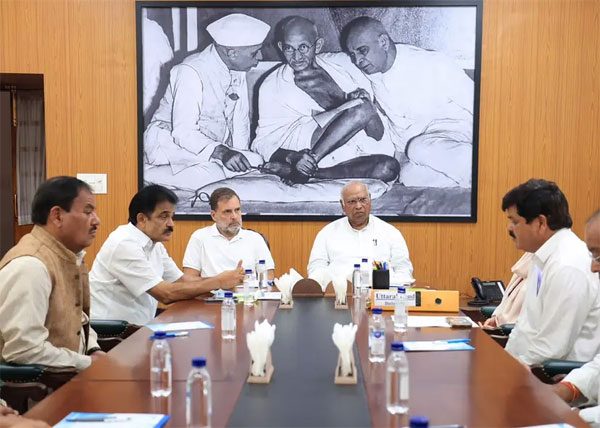
He alleged that hatred, loot, land-grabbing and complete misgovernance represented the BJP's "trouble engine" model in both states. Referring to Manipur, he said the state continued to burn in the flames of ethnic conflict allegedly ignited by the ruling regime.
Venugopal said people had already rejected the BJP in both Lok Sabha constituencies in Manipur and Uttarakhand in the 2024 elections and were eager to remove the party from power completely.
Targeting the BJP government in Uttarakhand, he alleged that even the temples of Devbhoomi had not been spared from what he termed "Chanda Chori", which he claimed the BJP had mastered in Ayodhya and elsewhere.
He further alleged that vast mountain areas were being handed over to corporate entities despite clear warnings from nature against such destruction.
Venugopal also highlighted issues affecting the youth and women of Uttarakhand, including examination paper leaks and what he described as a mockery of justice in the Ankita Bhandari case.
He asserted that people would unseat the BJP in 2027 and give the Congress a decisive majority, paving the way for what he called a people's government in both states.
The meeting signals the Congress's efforts to strengthen its organisation and political outreach in Manipur and Uttarakhand ahead of the next Assembly elections.
Venugopal said discussions with leaders from the two states focused on stepping up organisational activities and building on the growing public discontent against the BJP governments.
He stressed the need for a coordinated campaign highlighting governance issues, local aspirations and public concerns.