January 6, 2026
Why have Dakshina Kannada and Udupi districts been communally quiet over the past year? What has changed in the two coastal districts of Karnataka where rupture in social relations between Hindus, Muslims and Christians was sought to be created every so often by the BJP and other Sangh Parivar groups, and the banned Popular Front of India? It is not as if the cattle vigilantes, the freelance moral police and the anti-hijab agitators have realised their error. Nor can it be said that the likes of those who tried to hold up the renovation of a mosque over alleged discovery of temple remnants, those opposed to Muslim hawkers at Hindu festival fairs or those who sought to eject a Christian nun from her teaching job for alleged religious insult have found virtue in brotherhood. Studies have shown that communal conflict delivers votes to sectarian political parties. So, what has changed?
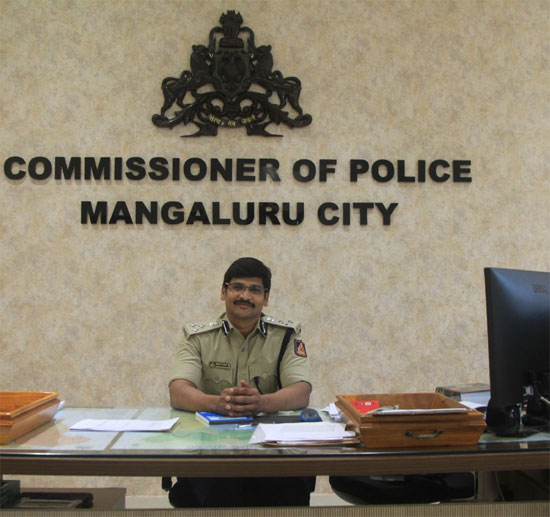
In Mangaluru City Police Commissioner, Sudheer Kumar Reddy’s telling, routine policing, diligently performed has tamed the agitators of communal politics. Reddy took over the job in May last year after a three-year lull in tit-for-tat political murders – 18 in the past 15 years according to him – was broken. At the end of last April, a labourer was beaten to death in Kudupu on the outskirts of Mangaluru city, by a mob for (falsely it turned out) shouting Pakistan Zindabad during a local cricket match. A few days later, on 1 May, a gangster with five criminal cases and hailed as a Hindutva warrior was killed near the airport. He was accused in the murder of a Muslim youth three years ago and out on bail. A notification handing over the case to the National Investigative Agency (NIA) said members of PFI were behind it. In seeming retaliation, the secretary of a mosque (and a driver of a truck hauling sand) was killed in Bantwal allegedly by members of the Bajrang Dal.
When Muslim members of the Congress Party’s minority cell threatened to resign if security was not assured to their community, the government was jolted into action. Reddy was made the city police commissioner. A Special Action Force (SAF) was set up. Reddy was also given charge of it. The SAF comprises three units - for Dakshina Kannda, Udupi and Shivamogga districts – each with 78 personnel.
The move drew cries of “appeasement” from state BJP leaders, but the mandate to the police from the state government was clear: communal incidents should be checked before they flared.
It is hard to say whether the SAF is dormant or active. In an interview to this correspondent last month Reddy said the personnel were getting lessons in Tulu, in which he is himself proficient. Many of them did well when tested for their ability to gather local intelligence. It appears the SAF police are still in training mode, though Reddy said it was not necessary for them to exhibit their presence to the public.
Routine measures seem to have worked so far. Reddy says those posting inflammatory social media messages are promptly booked and arrested. Forty-six of them have been arrested since May. Of these 21 were sent to judicial custody and the others released under court orders after being warned against repeating the offences. Those let off are usually first-time offenders. The challenge for the police, Reddy said, is to lift the cover of anonymity from the hate-speech mongers. They get emboldened when law enforcers lose track or interest. But when the trouble makers are apprehended, and the fact is amplified in the media, others tempted to stir the pot are compelled to rethink.
This echoes the famous ‘broken windows theory’ which says that minor offences when not curbed lead to the commitment of serious crimes.
Successful efforts in booking those accused of political murders regardless of their party or religious affiliations has also created a sense of unease among criminals, Reddy says. The NIA has filed chargesheets against 11 persons for the murder in May of the so-called Hindutva warrior, Suhas Shetty, a Bajrang Dal member. Fourteen persons have been arrested for the murder of Abdul Rahiman, the mosque secretary, and the stringent Karnataka Control of Organised Crime Act (KCOCA), has been invoked against them.
Evenhandedness is necessary as the police has been accused of bias, a charge Reddy denies. During Bommai’s tenure, policepersons of two stations, one of them in Kaup, posed in saffron clothes, drawing criticism from Siddaramaiah, the present chief minster.
So, when a KCOCA court in Mysuru sent back Bharat Kumdel, a Bajrang Dal leader accused in the murder of an SDPI member in 2017 and of the mosque secretary earlier this year to be tried in a Mangaluru court, Muslim groups blamed the police for being slack in not filing a chargesheet under KCOCA within the period of 90 days. Reddy says the police is making amends.
In July the state government created a special panel of law officers to represent the Mangaluru City Police Commissionerate and the Dakshina Kannada District Police Unit in the Karnataka High Court to handle the rise in communal cases. This is to ensure that the bail applications of those accused of communal crimes are contested, and they are not easily set free.
Earlier, arrest warrants were often not executed either out of complacency or lack of time. Now, Reddy says, there is a team which gives a report everyday about persons against whom warrants have been issued, how many have been executed and how many pending. Keeping them busy in courts is a strategy to tie down the offenders. If they fail to appear the sureties are made to pay.
Unlike communal hotspots that have seen religious violence, where mobs burn, loot, kill and maim, people have not clashed in Dakshina Kannada or Udupi. The violence, in speech and action, is usually confined to individuals and outfits espousing communal ideology. This does not suggest the absence of communal feeling among people of the three principal communities. Communal stereotypes are rife. But they have not come in the way of day-to-day interactions. Businesspeople, salaries employees and wage labourers have a vested interest in peace. It is only political entrepreneurs who profit from communal strife. But without government support, the embers of communal politics cannot smoulder.
The views expressed in this article are those of the author and do not necessarily reflect the official views or positions of Daijiworld.