Daijiworld Media Network - New Delhi
New Delhi, Dec 5: The Supreme Court on Friday firmly ruled that money belonging to temples must be preserved exclusively for the deity and cannot be diverted to support financially distressed cooperative banks. The observation came from a Bench led by Chief Justice of India (CJI) Surya Kant, along with Justice Joymalya Bagchi, while dismissing special leave petitions (SLPs) filed by Kerala-based cooperative banks.
These banks had challenged a Kerala High Court directive ordering them to immediately return the fixed deposits held by the Thirunelly Temple Devaswom. Upholding the High Court’s order, the apex court made it clear that donations collected from devotees must be “saved, protected and utilised only for the interests of the temple” and cannot become a fallback source for any cooperative institution’s survival.
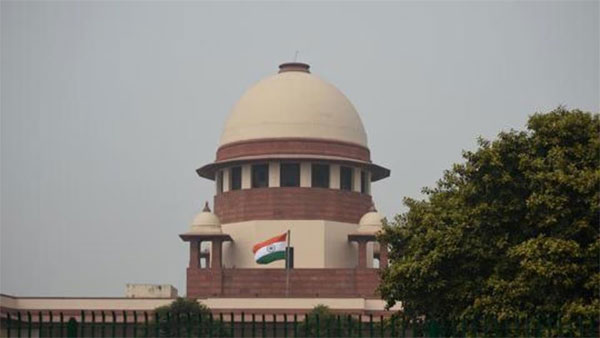
“You want to use the temple money to save the bank? Temple money, first of all, belongs to the deity,” the Bench remarked, rejecting the plea to interfere with the High Court’s decision that mandated shifting the matured deposits to nationalised banks.
The cooperative banks argued before the Supreme Court that the Kerala High Court’s two-month deadline was too abrupt and made compliance difficult. The CJI, however, responded that credibility must be earned through performance: “If you cannot attract customers and deposits, that is your problem.” The court emphasised that matured deposits must be released without delay.
While dismissing the petitions, the Supreme Court allowed the banks to approach the Kerala High Court for an extension of time to complete the repayment.
The SLPs were filed by the Mananthawady Co-operative Urban Society Ltd and the Thirunelly Service Co-operative Bank Ltd, following a High Court ruling that temples under the Malabar Devaswom Board cannot maintain deposits with cooperative societies in violation of existing circulars.
In its judgment, the Kerala High Court held that the circulars issued by the Malabar Devaswom Board explicitly prohibited such deposits. After reviewing audit reports, the court concluded that the cooperative banks had “no right whatsoever” to refuse closure of these accounts.
A Bench of Justices Raja Vijayaraghavan V. and K.V. Jayakumar further directed that all temple funds deposited with cooperative societies must be withdrawn upon maturity and reallocated to authorised banks and financial institutions.