Daijiworld Media Network – Washington
Washington, Dec 9: The US Supreme Court on Monday appeared ready to side with President Donald Trump and permit him to fire a member of the Federal Trade Commission (FTC) without cause, a move that could redefine the role and independence of America’s federal agencies.
The conservative-majority bench heard arguments on whether Trump had the authority to dismiss Rebecca Kelly Slaughter despite the 1914 law that created the FTC, which clearly states that members can be removed only for “inefficiency, neglect of duty, or malfeasance in office.” The court, split 6-3 along ideological lines, has already indicated through earlier orders that Trump is likely to prevail, allowing Slaughter to be removed while litigation continues.
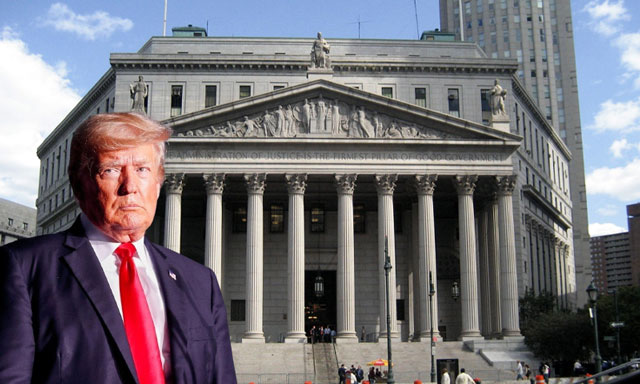
A ruling in Trump’s favour would have far-reaching implications, potentially giving presidents sweeping powers over several similar agencies created by Congress to operate independently. The court has also allowed Trump to proceed with firings at other affected bodies, signalling support for the administration's stance.
During the hearing, conservative justices questioned the validity of the landmark 1935 ruling Humphrey’s Executor v. United States, which upheld limits on a president’s power to remove FTC members. Justice Neil Gorsuch said the ruling was “poorly reasoned,” while Chief Justice John Roberts noted that the agency now exercises far more executive authority than it did decades ago. Justice Brett Kavanaugh echoed concerns that independent agencies wield enormous power without being accountable to voters.
Some justices, however, explored possible limits to the president’s removal powers, particularly regarding the Federal Reserve, which functions under a separate framework. Liberal justices strongly opposed the government’s argument, warning that weakening protections for independent agencies would “destroy the structure of government.”
Trump dismissed Slaughter and another Democratic commissioner in March, leaving the FTC—responsible for consumer protection and antitrust enforcement—with only two Republican-appointed members. Since taking office in January, Trump has aggressively reshaped the federal bureaucracy, downsizing agencies, withholding spending approved by Congress, and terminating thousands of career employees. His administration has leaned heavily on the “unitary executive theory,” which argues that all executive power should rest solely with the president.
Business groups, including the influential US Chamber of Commerce, have supported Trump's position. His administration has also removed members from agencies dealing with health, safety, labour, and environmental oversight, as well as bodies not directly under executive branch authority.
The FTC firing case is one of several in which the Supreme Court has faced criticism for issuing emergency rulings favouring Trump without detailed opinions. One exception has been Trump’s attempt to remove Federal Reserve Governor Lisa Cook, with the court signalling that the Fed’s structure makes it distinct from agencies like the FTC. Arguments in that case will be heard in January.