Daijiworld Media Network - New Delhi
New Delhi, Dec 9: Union home minister Amit Shah on Tuesday underscored the historic and emotional significance of Vande Mataram, calling it a powerful force that revived India’s national consciousness during the freedom struggle. Speaking in the Rajya Sabha during a discussion marking 150 years of the iconic national song, Shah said the chant had united the country against colonial rule in a way the British could never suppress.
He noted that during centuries of invasions and later the British era, India’s temples, universities, art centres, and knowledge systems were destroyed. Yet, the cultural spirit of the nation survived within its people. “There was a need to reignite that spirit,” Shah said, adding that Bankim Chandra Chattopadhyay’s composition emerged precisely at such a crucial moment.
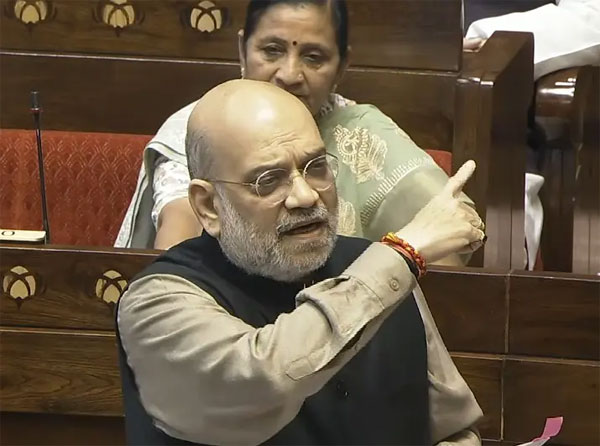
According to Shah, Vande Mataram quickly travelled across the subcontinent, even reaching remote regions like the Andaman and Nicobar Islands. “Neither the British nor those who embraced British culture could halt its spread,” he said, emphasising how the slogan became a powerful symbol of national unity and resistance.
Shah expressed that the ongoing discussion in Parliament would help future generations appreciate the song’s deep connection to India’s freedom movement and its message of devotion to the motherland. This understanding, he said, should inspire young Indians to contribute to building a stronger, “great India”.
Responding to Opposition criticism questioning the need for such a discussion, Shah asserted that Vande Mataram was essential during the freedom struggle and remains equally relevant today, especially in the context of the nation’s aspiration for a “Viksit Bharat 2047”.
Tracing the song’s cultural roots, Shah explained that it encapsulated India’s ancient civilisational ethos and the longstanding tradition of viewing the nation as a mother figure. This idea, he said, was beautifully reflected in Bankim Chandra’s composition.
He described Vande Mataram as a rallying cry that inspired countless freedom fighters to lay down their lives for the nation. “It became the clarion call for independence,” he said, adding that generations have drawn immense motivation from the song to preserve India’s cultural identity and pursue its civilisational path forward.