As digital transactions continue to play a central role in global commerce, businesses are steadily adopting new methods to manage cross-border payments more efficiently. Among these emerging tools, the USDT payment gateway is becoming an increasingly common choice for companies seeking fast, stable, and easily accessible financial solutions.
Over the past year, more online platforms, freelancers, digital service providers, and international retailers have begun integrating stablecoin-powered payment systems into their operations. This shift reflects a wider trend toward alternatives that reduce the delays, high fees, and currency-conversion challenges associated with traditional banking channels.
Growing Preference for Stable Digital Payments
Unlike other cryptocurrencies known for price volatility, USDT (Tether) maintains a stable value pegged to the US dollar. For many businesses, this stability has made USDT a practical instrument for everyday financial activity, especially in international environments where currency risk can be high.
Reports from various sectors suggest that businesses adopting a USDT payment gateway experience fewer complications when dealing with global customers. Transactions can be completed within minutes, regardless of distance or banking hours, allowing companies to streamline both customer payments and internal settlements.
Industry observers note that the increased usage of stablecoins is part of a broader movement toward more predictable digital finance tools, particularly in regions where businesses frequently interact with international clients.
Addressing Limitations of Traditional Systems
Although card processors and banks remain widely used, many companies continue to encounter operational challenges such as:
- slow cross-border transfers
- high international transaction fees
- lengthy settlement times
- restricted access in certain jurisdictions
These limitations have driven businesses to explore digital alternatives that offer greater reliability and speed. A USDT payment gateway provides an alternative approach, enabling more direct and efficient transaction flows while reducing operational friction and settlement delays.
How USDT Payment Gateways Work
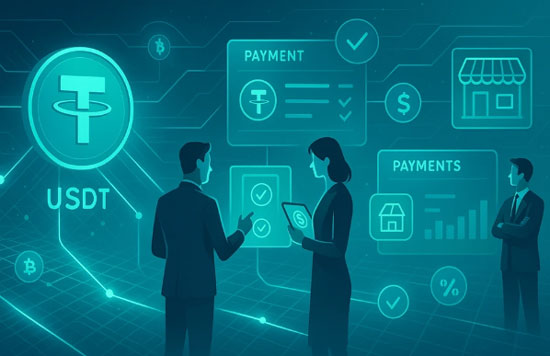
A typical USDT payment gateway allows businesses to accept Tether on their websites through automated invoices, payment buttons, or API-based integrations. The system verifies incoming payments on the blockchain and notifies the business once the transaction is complete.
Because USDT operates across multiple networks—including Ethereum, Tron, and BNB Smart Chain—companies can choose whichever chain offers the most cost-efficient or reliable performance for their needs.
Some platforms also offer automated conversions into other digital assets or stablecoins, enabling companies to maintain balanced treasury structures.
BitHide as an Example of a Non-Custodial Gateway Solution
Several providers now support USDT payments, and one example is BitHide, a non-custodial, self-hosted software solution designed for managing crypto payment operations. With this model, businesses retain full control over their funds instead of relying on external custodians.
According to the information available on its website, BitHide enables companies to accept crypto payments—including USDT—through features such as:
- API-based integration for developers
- automated or manual transaction processing
- support for multiple currencies including BTC, ETH, USDT, USDC, TRX, and BNB
- non-custodial wallet management for stronger security
This approach provides businesses with greater control, security, and flexibility when managing digital asset operations. BitHide is suitable for e-commerce platforms, digital services, and international businesses working with crypto payments.
Expanding Use Across Multiple Industries
The adoption of USDT payment gateway solutions is growing across several sectors. E-commerce websites use them to reach customers in regions with limited access to traditional payment methods. Freelancers and remote workers increasingly rely on fast USDT transfers to avoid banking delays and currency fluctuations.
Digital marketplaces, software-as-a-service platforms, and online subscription services also report smoother operations when handling recurring or micro-transactions using stablecoins.
Observers believe that the preference for stable digital payments is strengthening as businesses become more comfortable with blockchain-based financial tools.
A Practical Step in Modern Digital Commerce
As global online activity expands, companies continue searching for payment solutions that combine speed, predictability, and accessibility. The USDT payment gateway has emerged as a practical option for businesses adapting to the demands of modern digital commerce.
While traditional payment systems remain essential, stablecoin-based alternatives offer a complementary approach that enhances transaction efficiency and reduces operational friction. With ongoing interest in digital finance tools across multiple industries, the integration of USDT payments appears poised to remain a significant trend in the evolving global economy.