Daijiworld Media Network – Washington
Washington, Dec 10: US President Donald Trump has claimed that the principle of birthright citizenship in the United States was originally established only for the children of enslaved people, and not intended to benefit what he described as “rich immigrants” entering the country to secure citizenship for their families.
In an interview with Politico, Trump defended the executive order he signed on his first day back in office in January 2025 to end birthright citizenship — a protection guaranteed under the 14th Amendment of the US Constitution.
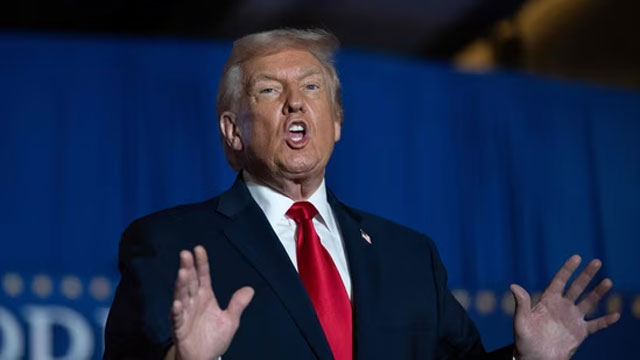
“The case is very interesting because that case was meant for the babies of slaves,” Trump told the publication. “That case was not meant for some rich person coming from another country, putting a foot in our country, and all of a sudden their whole family becomes United States citizens.”
He said a Supreme Court decision against his administration would be “devastating,” adding that modern application of the 14th Amendment has “been explained” to people and that even the court “understands it.”
The 14th Amendment — adopted in 1868 after the Civil War — grants citizenship to all persons born or naturalized in the United States. It was primarily enacted to ensure that formerly enslaved individuals and their children were recognized as citizens.
However, the Trump administration argues that the amendment has been misinterpreted over time and insists that the US “cannot afford to house tens of millions of people.”
Following Trump’s executive order, his administration announced that children born in the US 30 days after January 20, 2025, would no longer automatically qualify for citizenship.
The order has since faced multiple legal challenges. Although several federal courts initially blocked the move, the US Supreme Court ruled in June that lower courts lack the authority to issue broad nationwide injunctions against presidential executive orders. The top court has taken up the case to review the constitutionality of Trump’s action.
As the legal battle continues, the future of birthright citizenship — a fundamental pillar of American immigration policy for more than 150 years — remains uncertain.