Daijiworld Media Network - New Delhi
New Delhi, Dec 17: Finance minister Nirmala Sitharaman on Wednesday emphasized that lowering India’s debt-to-GDP ratio will be a central focus for the government in the next financial year (2026-27). Speaking at a media event, she noted that the ratio, which had crossed 60% during the Covid period, is already declining but requires further attention.
Sitharaman highlighted concerns over high debt levels in some states, citing RBI studies that show unsustainable borrowing patterns. “Unless managed within FRBM limits and high-interest debt is reduced, states borrow to service loans, not development. This threatens the 10-year momentum for Viksit Bharat by 2047,” she said.
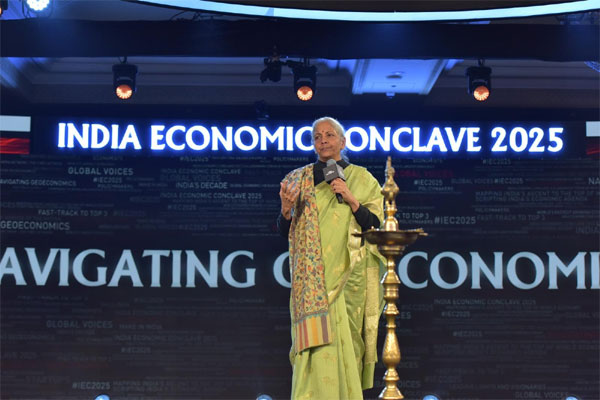
The finance minister reaffirmed the central government’s commitment to fiscal transparency and disciplined budgeting, noting that debt reduction will remain a priority while the fiscal deficit continues to serve as a marker for financial management. She also stressed the importance of deepening the bond market to channel more funds into productive investments.
Sitharaman credited India’s stable governance under Prime Minister Narendra Modi’s third term for enabling the country to negotiate effectively on the global stage. She pointed to improvements in financial inclusion, credit access through schemes like Mudra, and universal bank accounts, which have strengthened Indians’ formal credit footprints and facilitated greater participation in the economy.
Looking ahead, she outlined the government’s vision for Viksit Bharat, aiming for India to contribute 25% to global trade by revitalizing manufacturing, agriculture, value addition, and the services sector. Sitharaman highlighted the role of private sector R&D and corporate investment, while emphasizing the need for energy security through nuclear, solar, wind, and hydro initiatives to support growth and employment.
The finance minister praised the resilience of the Indian population in sustaining economic growth despite challenges such as Covid, underscoring that the nation’s progress is driven by its people. She also cautioned that global trade is increasingly protectionist, with tariffs often weaponized, and stressed the need for India to leverage its economic strength in international negotiations.
In summary, the government aims to reduce debt, maintain fiscal discipline, expand financial inclusion, and strengthen India’s position in global trade, laying the foundation for long-term economic growth and stability.