Daijiworld Media Network - New Delhi
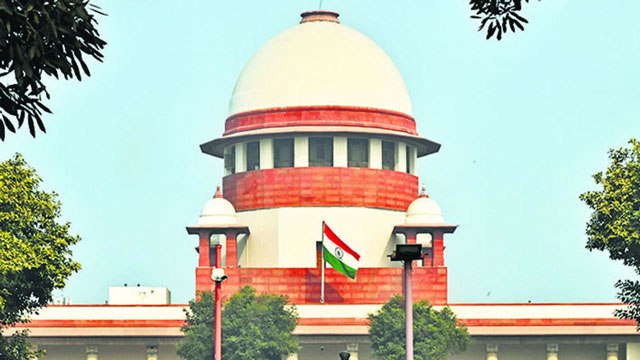
New Delhi, Dec 18: The Supreme Court on Wednesday expressed concern over what it described as a “growing trend” of judges passing a flurry of orders just before retirement, likening it to a batter “hitting sixes” in the final overs of a match.
An apex court bench headed by Chief Justice Surya Kant was hearing a plea filed by a principal and district judge from Madhya Pradesh, who challenged a full court decision of the high court suspending him merely 10 days before his scheduled retirement, allegedly over questionable judicial orders.
“Petitioner just before retirement started hitting sixes. It is an unfortunate trend. I do not want to elaborate on it,” the bench, also comprising Justices Joymalya Bagchi and Vipul M Pancholi, observed. The Chief Justice further noted that there has been a noticeable increase in judges passing multiple orders just before demitting office.
The judicial officer, who was earlier due to retire on November 30, was suspended on November 19, reportedly due to two judicial orders passed by him. Senior advocate Vipin Sanghi, appearing for the officer, told the court that his client had an impeccable service record, with consistently high ratings in his annual confidential reports.
Questioning the legality of the suspension, Sanghi argued that judicial officers cannot be subjected to disciplinary action merely for passing judicial orders. “How can an officer be suspended for judicial orders which can be appealed against and rectified by the higher judiciary?” he asked.
The bench agreed in principle, observing that disciplinary proceedings cannot ordinarily be initiated against a judicial officer for erroneous orders. However, the Chief Justice drew a distinction between judicial error and misconduct, remarking, “He cannot be suspended for this. But what if the orders are palpably dishonest?”
The court also noted that on November 20, it had directed the Madhya Pradesh government to enhance the retirement age of judicial officers from 60 to 61 years. Consequently, the officer is now due to retire on November 30, 2026. The bench pointed out that the officer was unaware of the extension at the time he passed the disputed orders.
During the hearing, the bench questioned why the officer had not approached the high court to challenge the suspension. Sanghi replied that since the suspension was based on a full court decision, the officer felt it appropriate to seek relief directly from the Supreme Court. The bench, however, observed that full court decisions have been set aside by high courts in judicial proceedings on several occasions.
The court also took exception to the officer seeking details of his suspension through applications under the Right to Information Act, stating that it was not expected of a senior judicial officer to resort to the RTI route when he could have submitted a representation.
Declining to entertain the petition, the bench granted liberty to the judicial officer to make a representation before the high court seeking recall of the suspension order. It directed the high court to consider and decide the representation within four weeks.