Daijiworld Media Network – Bengaluru
Bengaluru, Jan 2: In a sweeping reform push, the second Karnataka State Administrative Reforms Commission has urged the State government to scrap or merge nearly 1,000 schemes that suffer from nil or negligible funding and have failed to deliver meaningful results on the ground.
The commission noted that of the 2,874 schemes announced over the past 25 years—largely coinciding with the formation of successive governments—around 1,000 schemes have received zero or extremely low budgetary allocations. Many of these programmes, it said, have been reduced to mere accounting entries, existing largely for book-keeping and debt-management purposes rather than public benefit. Given their repetitive expenditure and lack of outcomes, the commission concluded that such schemes should be discontinued or merged.
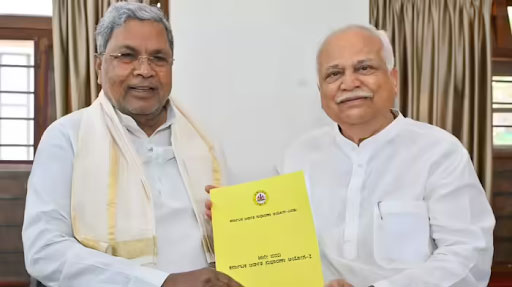
Commission chairman and former minister R V Deshpande earlier this week submitted the 10th report of the commission, containing 352 recommendations, to chief minister Siddaramaiah. Briefing the media later, Deshpande said, “Old schemes are not being provided allocations in the Budget. When funds are either nil or minimal, many schemes remain confined to accounting and loan management. This is why the commission has taken this view.”
Reallocation over retention
Emphasising impact-driven spending, Deshpande said the commission has recommended dropping older state schemes with very limited beneficiaries and reallocating funds to programmes with greater reach and effectiveness. He added that 280 schemes with allocations below Rs 1 crore should be reviewed within a fixed timeframe, and those found unworkable should be shut down.
“This will prevent the accumulation of unused budget heads and help the government move towards a simplified and standardised framework,” he said.
Push for mergers with central schemes
To address duplication, the commission has recommended merging overlapping state schemes related to livestock development, breed improvement, artificial insemination, fodder development, animal health services and productivity enhancement with centrally sponsored programmes such as the National Livestock Mission, Livestock Health and Disease Control Programme, and the Rashtriya Krishi Vikas Yojana.
Dedicated oversight mechanism
The report also calls for the establishment of a dedicated monitoring unit within the Department of Personnel and Administrative Reforms (DPAR) to oversee implementation of the commission’s recommendations even after its tenure concludes. It proposes quarterly, department-wise review meetings chaired by the chief secretary, with a mandatory reform implementation report to be submitted to the chief minister.