Daijiworld Media Network - Panaji
Panaji, Jan 9: In a bid to inspire youth to take up farming, the Goa government has appointed 32-year-old progressive farmer Varad Samant as the state’s agriculture brand ambassador. The move aims to highlight that agriculture, when backed by innovation, mechanisation and government support, can be both profitable and sustainable.
Chief Minister Pramod Sawant said Samant’s journey from a reluctant cultivator to a high-volume vegetable producer reflects the true potential of modern farming in Goa. “For three consecutive years, we have paid him Rs 65 lakh, Rs 60 lakh and Rs 58 lakh. This was not because he sourced vegetables from outside, but because he cultivated his own produce within Goa,” Sawant said, referring to purchases made by the horticulture department.
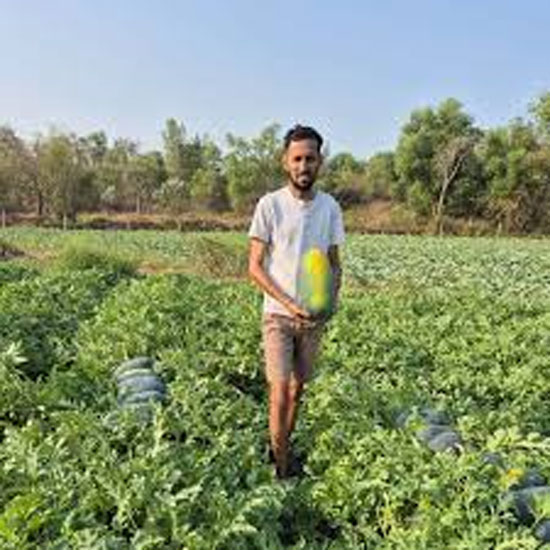
A resident of Dharbandora, Samant had not initially planned a career in agriculture. After completing his B.Com in 2012, he explored other options, even though his father was a farmer. Between 2010 and 2014, his family cultivated sugarcane, but it was only later that Samant began experimenting with vegetable farming.
He travelled to Karnataka and Maharashtra to study best practices and returned to Goa to start on a small scale, cultivating bhindi on about 2,000 square metres. Encouraged by its success, he gradually expanded into cucumbers, carrots, cabbage and other vegetables.
“That was when I realised vegetable farming is very much possible in Goa,” Samant said.
Today, he cultivates vegetables on around 10 acres, combining traditional knowledge with efficient, mechanised techniques. His current crops include cabbage, carrots and watermelon, alongside bhindi and other vegetables. He supplies 70–80 tonnes of cabbage annually to the Goa State Horticulture Corporation, along with several tonnes of carrots and other produce, which are sold to the public through government outlets.
Samant said watermelon farming alone can be highly lucrative. “If watermelons sell at Rs 30 per kg, a farmer can earn around Rs 6 lakh from 20 tonnes in just 60 days,” he explained. His annual income ranges between Rs 50 lakh and Rs 60 lakh, with a profit margin of around 25–30 per cent after expenses.
The chief minister added that Samant himself claimed his net profit was even higher. “He told me his net profit is about Rs 30 lakh purely from vegetable cultivation,” Sawant said, noting that Samant employs around 20–22 workers and farms within 60,000 square metres.
Expressing surprise at being named brand ambassador, Samant said he never imagined such recognition. “The chief minister recently contacted me and asked me to take up this responsibility of creating awareness about vegetable farming in Goa,” he said.
Agriculture Director Sandeep Phaldesai said the appointment aligns with the government’s vision of making Goa self-sufficient in vegetable production. “Under the Promotion of Vegetables with Assured Market scheme, we have set an ambitious target to become ‘Swayampurna’ in vegetables,” he said, adding that Samant will conduct sessions, demonstrations and lectures across all talukas.
Samant credited government schemes, especially assured pricing, for his success. “For bhindi, farmers get Rs 50 per kg throughout the year. Such assured pricing is rare elsewhere,” he said.
With Samant as its face, the Goa government hopes to change the perception that farming is unviable in the state and convey that agriculture can be modern, aspirational and rewarding, particularly for young Goans.