Daijiworld Media Network – New Delhi
New Delhi, Jan 10: With the global economy increasingly fragmented by tariff wars, sanctions, the prolonged Russia–Ukraine conflict and rising geopolitical tensions, India is facing strong external headwinds even as new strategic opportunities open up. In this volatile backdrop, policymakers are under pressure to turn disruption into advantage by strengthening sectors that boost domestic resilience while enhancing global competitiveness.
Among these, shipping and ports are emerging as a critical focus area. Often viewed merely as supporting infrastructure, maritime capacity has now become central to economic and strategic power in an era of contested trade routes and supply chains. India’s efficiency in moving goods, managing logistics costs and building maritime manufacturing capabilities will significantly influence its ability to benefit from global supply-chain diversification.
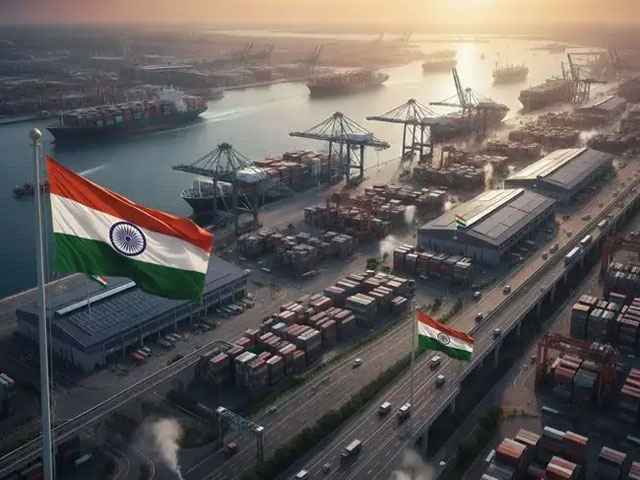
Experts note that the shipping and ports sector, if backed by timely and coherent policy measures in Budget 2026, could act as a “power-lifter” for the Indian economy—supporting manufacturing, exports, employment generation and strategic autonomy during uncertain global conditions.
The sector’s importance is underscored by India’s heavy reliance on maritime trade. Nearly 95 per cent of the country’s trade by volume and around 70 per cent by value is carried through sea routes. Over the last decade, port capacity has expanded rapidly, with total handling capacity now exceeding 2,600 million tonnes per annum. At the same time, operational efficiency has improved markedly, with average turnaround times at major ports declining due to digitalisation, mechanisation and increased private participation.
A major milestone in India’s maritime journey has been the development of the Vizhinjam International Seaport in Kerala. As the country’s first deep-water, all-weather transhipment port, Vizhinjam represents a strategic shift in port infrastructure. Its natural draft enables it to handle ultra-large container vessels that earlier bypassed Indian ports in favour of Colombo, Singapore or Dubai.
Once fully operational, Vizhinjam is expected to reclaim a sizeable share of India’s transhipment cargo, cutting dependence on foreign ports and reducing logistics costs for exporters and importers. Alongside port expansion, the government has also focused on improving connectivity. The development of coastal roads, port-linked expressways, freight rail lines and links to industrial corridors is gradually addressing long-standing last-mile connectivity issues, reducing transit times and strengthening port-led industrial clusters.
Shipbuilding, however, remains a weak link despite India’s long coastline and skilled workforce. To address this, efforts are underway to scale up domestic shipbuilding capacity. India’s engagement with global players such as HD Hyundai signals an intent to acquire advanced technology, improve productivity and integrate Indian shipyards into global value chains. Such collaborations aim to move the sector beyond low-value segments into large commercial vessels, green ships and specialised maritime assets.
Despite these advances, challenges remain. India’s merchant fleet still carries only a small share of the nation’s trade, logistics costs are higher than those of key export competitors, and coastal shipping remains underutilised. Analysts point out that these gaps also highlight the sector’s vast untapped potential, making shipping and ports a key area to watch in the Union Budget 2026.