Excerpt from ‘Cancer Gellona’, a public health awareness programme hosted by Walter Nandalike with Dr Suresh Rao, Consultant Radiation Oncologist, MIO Hospital, Mangaluru.
Mangaluru, Jan 15: Cancer is no longer a distant word associated only with old age or rare illnesses. It is quietly affecting thousands of families around us. Among all cancers, head and neck cancer has emerged as one of the most alarming yet ignored health threats in India today. Unfortunately, India has earned the unwanted title of being the global capital for head and neck cancers. Every year, nearly two lakh new cases are detected in our country, while in comparison, the United States reports only around sixty thousand cases annually. Even more worrying is the fact that almost 80 percent of Indian patients reach hospitals only in advanced third or fourth stage, drastically reducing their chances of cure.

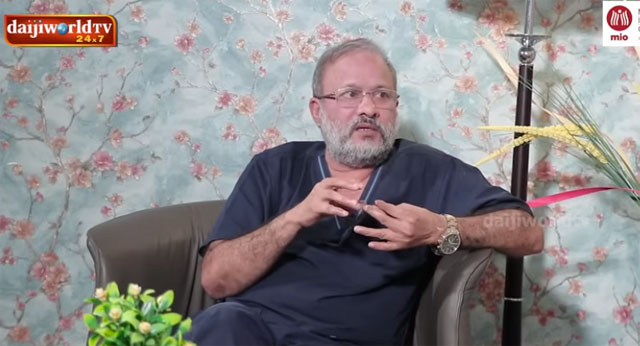
To address this growing crisis, Daijiworld, in collaboration with MIO Hospital and senior oncologist Dr Suresh Rao, has launched a public service programme titled ‘Cancer Gellona’. This programme is not meant for entertainment but is designed purely to create awareness, encourage early detection, and save lives. In just a short span, it has already helped several viewers identify symptoms early and seek timely medical care.
Understanding head and neck cancer
Head and neck cancer does not refer to a single disease. It is a group of cancers that occur in various parts such as the mouth, throat, voice box, tongue, tonsils, and nasal passages. These areas are constantly exposed to harmful substances we inhale, chew, or swallow, making them vulnerable to cancer-causing agents. The most common type is squamous cell carcinoma, which arises from the lining of the mouth and throat.
The major causes of head and neck cancer are tobacco in any form, excessive alcohol consumption, viral infections like HPV and Epstein-Barr virus, poor oral hygiene, sharp broken teeth, and nutritional deficiencies. Among these, tobacco is the biggest villain. Just three years of regular tobacco use can dramatically increase cancer risk. gutkha, pan masala, and similar chewing products are especially dangerous as they contain high levels of addictive nicotine and carcinogenic chemicals.
Alcohol alone may not directly cause cancer, but when combined with tobacco, the risk increases nearly forty times. Sadly, many young people consider these habits fashionable and harmless, influenced by celebrities promoting such products, without realizing the long-term damage being done to their bodies.
Early warning signs you should never ignore
One of the main reasons for high mortality in India is late diagnosis. Many people ignore early symptoms, hoping they will heal on their own. However, head and neck cancer gives clear warning signs if we pay attention.
Some of the most important symptoms include:
- A mouth ulcer that does not heal within two weeks
- White or red patches inside the mouth
- Persistent sore throat
- Pain while swallowing
- Change in voice or hoarseness
- A lump in the neck
- Ear pain without ear infection
- Unusual taste changes
A lump in the neck is often a sign that cancer has already spread to lymph nodes and usually indicates advanced disease. That is why self-examination of the mouth, regular dental checkups, and timely medical consultation are extremely important.
Diagnosis and treatment
If cancer is suspected, doctors perform a biopsy, where a small tissue sample is examined under a microscope. Once cancer is confirmed, scans such as CT, MRI, or PET scans are done to determine the stage of the disease.
Early-stage cancers can often be cured completely with surgery or radiation. Certain vocal cord cancers are almost 100 percent curable when detected early. However, advanced-stage cancers require more aggressive treatment, including a combination of surgery, radiation, and chemotherapy, and survival rates reduce significantly.
Unfortunately, many patients delay proper treatment due to fear, social stigma, financial concerns, and blind faith in unproven alternative therapies. This delay often turns a curable cancer into a life-threatening condition.
Cancer is not contagious
A dangerous misconception still exists that cancer is contagious. This is completely false. Cancer cannot spread from person to person through touch, food, or proximity. While viruses like HPV can increase the risk of certain cancers, cancer itself is not an infectious disease. This misunderstanding creates unnecessary fear and social isolation for patients who need emotional support the most.
The need for awareness and responsibility
Head and neck cancer is largely preventable. Avoiding tobacco, limiting alcohol, maintaining oral hygiene, and seeking early medical advice can save thousands of lives every year. Parents, teachers, and community leaders must educate young people about the real dangers behind so-called “cool habits.”
The ‘Cancer Gellona’ programme continues to educate viewers about symptoms, treatment options, and real-life case experiences. It encourages everyone to be alert, ask questions, and reach out to doctors without delay.
A simple message for every family
If you or anyone in your family has a mouth ulcer, persistent throat pain, or a lump in the neck that does not improve within two weeks, do not ignore it. Do not try home remedies endlessly. Do not delay. Early detection can mean the difference between life and death.
Cancer does not knock loudly. It whispers first. Learn to listen to your body.
Because awareness today can save a life tomorrow.
Watch video: