Daijiworld Media Network – New Delhi
New Delhi, Jan 28: Chinese electric vehicle major BYD Co. is reportedly exploring options to expand its presence in India, including setting up a form of local assembly, as demand for its EVs continues to rise sharply, sources familiar with the matter said.
According to the sources, BYD is evaluating the possibility of assembling vehicles locally and is also working towards obtaining safety and regulatory certifications for more models, as import quotas are limiting the number of fully built units it can bring into the country.
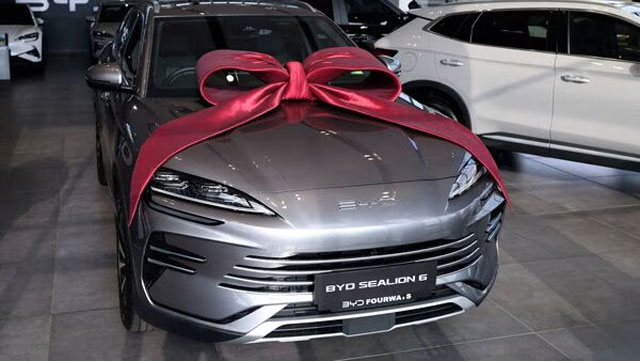
While India had earlier rejected BYD’s proposal to set up a full-scale manufacturing plant, the company is now said to be considering assembling vehicles using semi-knocked down (SKD) kits — a move that would be cheaper and easier to secure regulatory approvals for, compared to a full assembly facility. Any such manufacturing initiative is expected to follow a visit by senior BYD executives, the sources added.
The reassessment comes as dealers are reportedly sitting on hundreds of bookings, highlighting strong demand for BYD vehicles in India. This stands in contrast to Tesla Inc., which has reportedly been offering discounts on certain variants to boost sales in the Indian market.
The developments underline both the opportunities and regulatory hurdles facing BYD in one of the world’s fastest-growing automobile markets. They also signal a strategic shift, with BYD seemingly doubling down on India despite earlier resistance from New Delhi, especially during a period of heightened scrutiny of Chinese investments.
With EV growth slowing in China due to reduced subsidies and intensifying competition, BYD has been focusing on international expansion and is aiming to increase deliveries outside China by nearly 25% this year.
BYD’s India sales reportedly surged around 88% last year to about 5,500 vehicles, even as it continues to operate under rules that cap imports of each fully built model at 2,500 units. The company’s growth has come despite import duties of up to 110% on fully built cars, driven by pricing that remains relatively lower than Tesla’s offerings.
Industry sources noted that shifting to SKD assembly could reduce import tariffs significantly — down to 30% from 70% — providing a major boost to pricing and volumes.
BYD currently sells the Atto 3 compact electric SUV and the eMax7 multipurpose vehicle in India, both of which are reportedly approved for imports beyond the 2,500-unit cap. It also offers models such as the Sealion 7 and the Seal sedan.
The Atto 3 is priced starting at around Rs 25 lakh, even with a 70% import duty, placing it in the premium end of India’s mass-market EV segment alongside players like Tata Motors and Mahindra & Mahindra. However, it continues to undercut Tesla in pricing.
The Sealion 7, which reportedly sold 2,200 units in India last year, is priced between Rs 49 lakh and Rs 55 lakh — lower than Tesla’s Model Y, which starts at around Rs 60 lakh.
Sources said BYD has approached Indian auto regulators to raise concerns that import restrictions could limit its growth potential. Most of the company’s inventory in the December quarter has reportedly been sold out, unlike Tesla, which continues to face challenges due to the same tariff barriers.
Although relations between India and China have shown signs of improvement since last year, policy support for Chinese automakers remains uncertain. Sources said several BYD engineers and senior managers have been visiting India since last year, though planned visits by top executives have reportedly been delayed.