Daijiworld Media Network - New Delhi
New Delhi, Feb 7: Union Commerce and Industry minister Piyush Goyal on Saturday asserted that India’s farming community remains fully protected under the proposed India–US interim trade arrangement, with no concessions granted in sensitive agricultural segments.
Responding to a query from IANS during a media interaction in the capital, Goyal clarified that critical sectors such as grains, fruits, vegetables, spices, oilseeds, dairy, poultry, and meat have been kept outside the scope of tariff relaxations. He stressed that farmers’ welfare continues to be the government’s top priority.
“There has been absolutely no dilution of safeguards for India’s dairy sector. No access has been provided, and no conditional openings have been made,” the minister said, dismissing concerns of compromise.
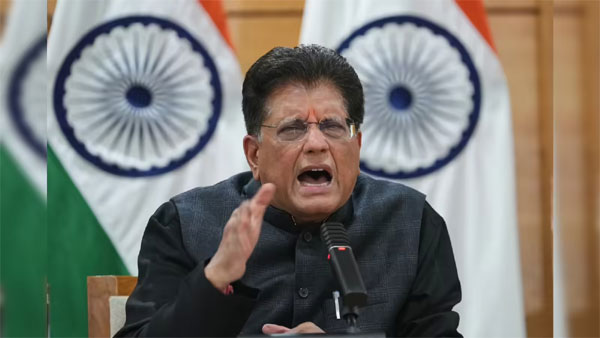
Goyal highlighted that the interim agreement instead focuses on expanding market access for Indian products, with several goods set to enter the US market at zero duty. These include tea, spices, coconut oil, vegetable wax, areca nut, Brazil nuts, chestnuts, and a wide range of fruits and vegetables.
He added that products such as vegetable roots, cereals, barley, bakery items, cocoa-based products, sesame and poppy seeds, as well as citrus juices, will also benefit from duty-free access without reciprocal tariffs.
The minister underscored that the agreement is structured to boost exports while safeguarding domestic livelihoods. “This trade framework strengthens India’s economic momentum without harming farmers’ interests,” he said, noting that it will generate growth opportunities for businesses, workers, and agricultural producers alike.
Describing the pact as fair and balanced, Goyal said it reinforces bilateral economic ties and positions India for faster economic advancement. “A stronger economy means shared prosperity for all 140 crore citizens, a celebration akin to Diwali,” he remarked.
Reiterating his assurance, Goyal concluded that the India–US trade understanding does not adversely impact farmers, MSMEs, or the handloom and handicraft sectors, while simultaneously deepening trade cooperation between the two nations.