Media Release
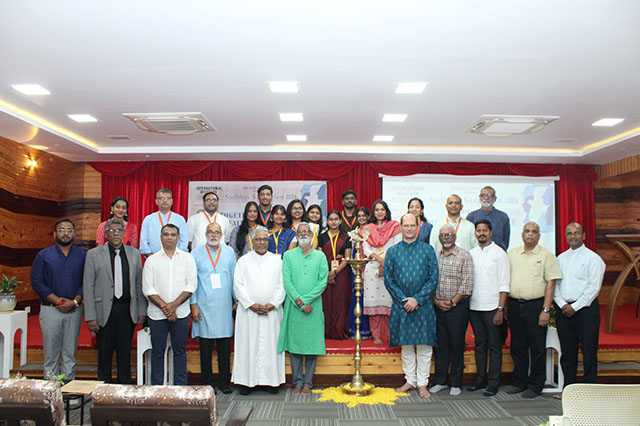
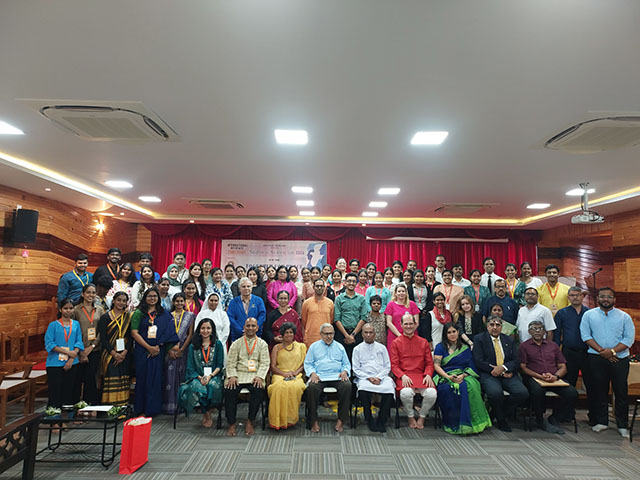
Pilar, Feb 10: The fourth edition of Sadbhav Sammelan 2026, an international interfaith conference, inaugurated on February 6, at Pilar Pilgrim Centre, Pilar Goa, brought together students, educators, researchers, peace practitioners, and faith leaders. The conference reflected on the theme 'Together for Peace: Faiths in Action'. The inaugural lamp was lit by Dr Narayan B Desai, educationist and researcher from Goa in the presence of Fr Nazareth Fernandes SFX, superior general of the Society of Pilar, Dr Frederico Rodrigues, principal of Fr Agnel College, Pilar and Dr Russell D'Souza, principal, Nirmala Institute of Education, Panaji.
Fr Lawrence Fernandes SFX, director of the Pilar Pilgrim Centre, welcomed the dignitaries and participants. Referring to Vinoba Bhave, he noted that while knowledge has grown, hearts have shrunk, causing global conflict. He expressed hope that the summit would foster fraternity, peace, and collective action across faiths.
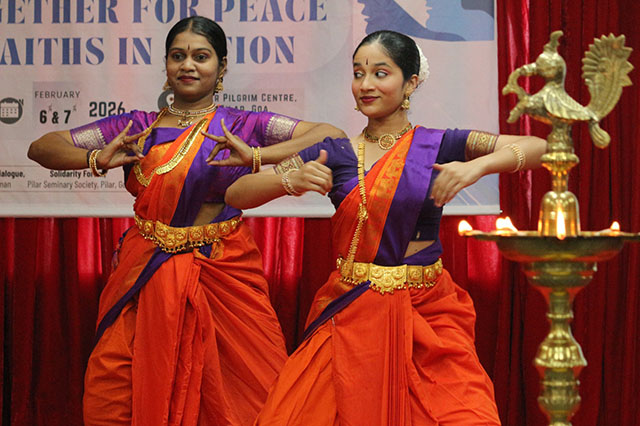
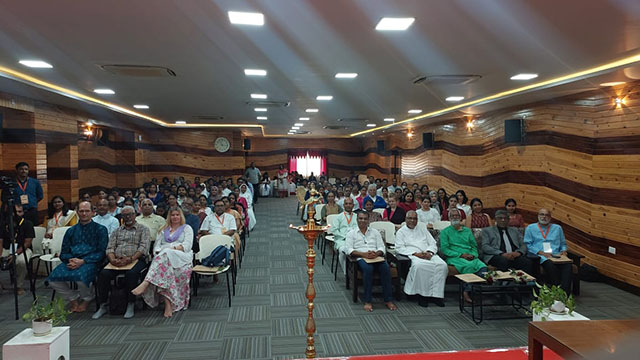
Dr Elvis Fernandes SFX, convenor of Sadbhav Sammelan 2026, outlined the vision and objectives of the conference and described it as a vibrant platform to promote shared learning and coexistence.
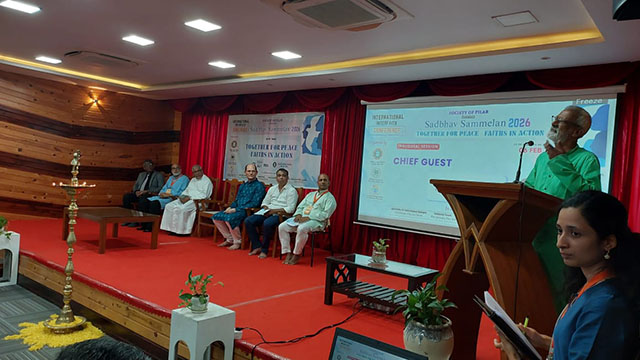
The chief guest, Dr Narayan B Desai, in his address, emphasized the significance of a 'lived faith rooted in compassion, dialogue, and ethical action'. He stressed that “learning and harmony begin by engaging with people of differing beliefs and practices,” urging the participants to navigate beyond religious exclusivism toward meaningful dialogue.
Fr Nazareth Fernandes SFX, superior general of the Society of Pilar, beautifully encapsulated the essence of the conference, sharing that it has “quietly but powerfully built bridges” among diverse faiths, fostering understanding and shared humanity.
The two-day Sammelan was marked by a diverse array of sessions, including a notable discussion led by Prof Kishu Daswani on 'Balancing Religious Morality with Constitutional Morality'. He highlighted the Indian Constitution’s commitment to protecting religious freedom while upholding societal well-being, fostering rich interaction amongst participants.
Workshops facilitated by esteemed interfaith peacebuilders like Urmi Chanda provided hands-on tools for conflict resolution through dialogue. “True dialogue becomes possible only when individuals are willing to understand themselves,” Chanda noted, emphasizing the importance of self-awareness in peacebuilding.
Adding depth to the conference, research presentations and discussions ignited vibrant conversations about faith as a foundation for environmental protection, the role of cultural theatre in moral reconciliation, and the critical examination of literature in addressing religious conflict. Each session offered a unique lens on the interplay between faith, ethics, and peace.
Participant and paper presenter Aditya Kapoor described the Sammelan as a profound exercise in self-realisation. “It is only through such platforms that civilisational truths can be expounded,” he said.
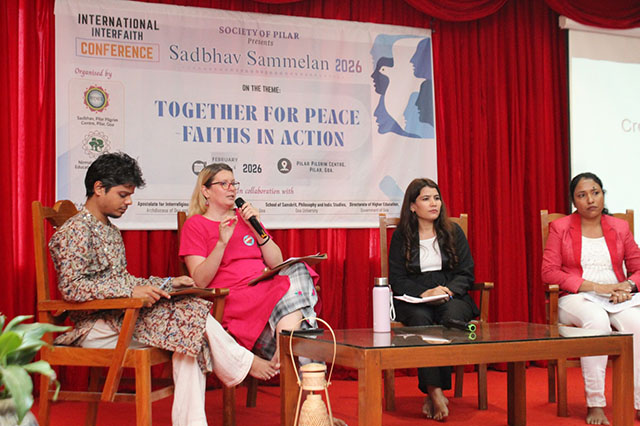
A particularly impactful moment came during the panel discussion on developing young leaders for a non-violent future. Participants engaged enthusiastically, envisioning actionable paths forward while discussing the social responsibilities of today’s youth. Antonet D’Souza, a teacher of Our Lady of Rosary High School, Dona Paula, highlighted that harmony flourishes when differences are respected and celebrated. “Such seminars strengthen social unity and nurture inclusive values,” she said, adding that they guide young people towards peaceful coexistence while encouraging moral reflection and respect for cultural identity across generations.
The valedictory session, led by Fr Bento Rodrigues, reinforced the compelling message that “religions divide, but spirituality unites.” Dr Russell D’Souza, echoed this sentiment, emphasizing that “peace is not an individual pursuit but a collective responsibility.”
As the conference drew to a close, key takeaways were synthesized by Sohana Sarkar, leading into a transformative session where participants were invited to become “ambassadors for peace in action.” Guided by Ahana Rao, attendees actively reflected on their roles in their communities and pledged to be catalysts for change.
For Jisha Poonachan, who served as the anchor for the event, the Sammelan stood apart for the quality of its conversations. “What struck me most was how conversations here felt less like formal discussions and more like people carefully placing their truths on a shared table, trusting others to hold them with respect,” she reflected.
Reflecting on the importance of continuity in dialogue, Sankalp Naik noted that genuine understanding emerges only through sustained engagement. “Repeated dialogue creates a safe space where individuals feel comfortable asking questions and sharing personal experiences,” he said.
For Sahil Awasthi, a student of Fr Agnel College, Pilar, the conference shed light on the root causes of many contemporary conflicts. “Many conflicts arise not from religion itself, but from misunderstanding and lack of communication,” he noted.
Sadbhav Sammelan, an initiative of the Society of Pilar was jointly organised by Sadbhav, Pilar Pilgrim Centre; Fr Agnel College of Arts and Commerce, Pilar; and the Nirmala Institute of Education, in collaboration with the Apostolate of Interreligious Dialogue of the archdiocese of Goa and Daman, the Solidarity Forum of Pilar Seminary, the School of Sanskrit, Philosophy and Indic Studies of Goa University, and the directorate of Higher Education, Government of Goa.
The fourth edition of the Sadbhav Sammelan concluded on February 7 on a note of hope and resolve, reaffirming the conviction that when faith is translated into action and dialogue replaces division, peace can become a lived reality rather than a distant ideal.