Daijiworld Media Network – Melbourne
Melbourne, Feb 13: Men tend to lose the Y chromosome from some of their cells as they age — a process once thought to be harmless because the Y carries relatively few genes beyond those involved in male determination.
However, mounting scientific evidence now suggests that loss of the Y chromosome in ageing men is associated with serious health conditions across multiple organs and may contribute to reduced lifespan.
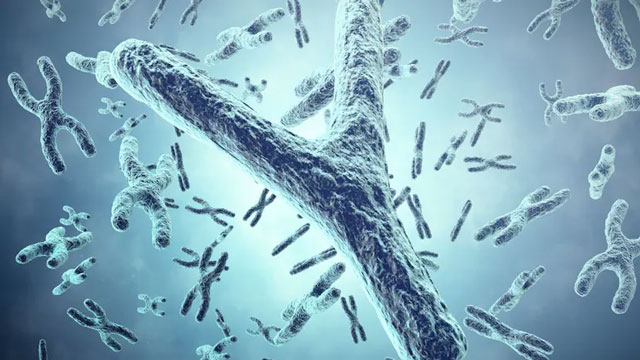
Loss of Y increases with age
Advanced genetic detection techniques show that Y chromosome loss becomes increasingly common in older men. Studies indicate that around 40 per cent of 60-year-old men show some loss of Y in their cells, rising to 57 per cent among 90-year-olds. Environmental factors such as smoking and exposure to carcinogens further increase the risk.
The loss does not occur in all cells but only in some, creating a mosaic pattern in the body — a mix of cells with and without a Y chromosome. Once lost, the Y chromosome is not regained in those cells or their descendants.
Laboratory studies have found that Y-deficient cells may grow faster than normal cells, suggesting they could gain a growth advantage in tissues and possibly in tumours. The Y chromosome is particularly vulnerable to errors during cell division and may be lost in rapidly dividing tissues.
Why the gene-poor Y still matters
The human Y chromosome carries only 51 protein-coding genes — far fewer than other chromosomes — and has long been viewed as biologically limited outside sex determination and sperm production.
It is the only chromosome that cells can lose without immediate death, reinforcing the belief that it plays a minor role in general cell function. In fact, some marsupial species lose the Y chromosome early in development, and in mammals, the Y has been gradually shrinking over 150 million years.
Despite this, recent findings challenge the idea that its loss is insignificant.
Links to heart disease, cancer and neurodegeneration
Research increasingly connects Y chromosome loss to major diseases, including cardiovascular disorders, neurodegenerative diseases and various cancers.
A large German study found that men over 60 with high frequencies of Y loss had a significantly increased risk of heart attacks. Y loss has also been associated with kidney disease and poorer outcomes in cancer patients.
In neurological disorders, studies have found a tenfold higher frequency of Y chromosome loss in patients with Alzheimer’s disease. It has also been linked to higher mortality from COVID-19, possibly helping explain sex differences in outcomes.
Cancer cells themselves frequently show Y loss alongside other chromosomal abnormalities. Some research suggests Y loss may directly influence tumour growth, including in eye melanoma, which occurs more frequently in men.
Cause or consequence?
Determining whether Y chromosome loss causes disease or is simply a byproduct of underlying illness remains challenging. It is possible that rapid cell division during tissue repair contributes to Y loss, or that genetic instability predisposes individuals to both Y loss and disease.
Genome-wide association studies suggest that about one-third of Y loss susceptibility is genetic, involving genes related to cell cycle regulation and cancer risk.
Animal studies provide stronger evidence of a direct role. In one experiment, mice given Y-deficient blood cells developed signs of age-related disease, including impaired heart function and heart failure.
Hidden functions of the Y chromosome
Although small, the Y chromosome contains genes with important regulatory roles. Beyond the male-determining SRY gene, several Y-linked genes are widely expressed in the body and are involved in gene regulation and cancer suppression.
Many of these genes have counterparts on the X chromosome, meaning males normally have two functional copies across both chromosomes. Cells that lose the Y may lack this balance, potentially disrupting gene regulation.
The Y chromosome also contains numerous non-coding genes that produce RNA molecules. These may regulate the activity of genes on other chromosomes, including those involved in immune response and heart function.
The complete sequencing of the human Y chromosome only occurred recently, and ongoing research is expected to shed further light on how its loss influences ageing and disease risk.