Daijiworld Media Network – Tel Aviv
Tel Aviv, Feb 14: The Israel Defense Forces (IDF) has unveiled a new robotic system capable of completing 48 hours of tank maintenance work in just two hours, significantly reducing risk and manpower requirements.
Developed by Israeli firm Ruby AI, the advanced robot features multiple mechanical arms that allow it to enter tank engines, clean and wash components, scan for faults and carry out complex operations that previously required human technicians.
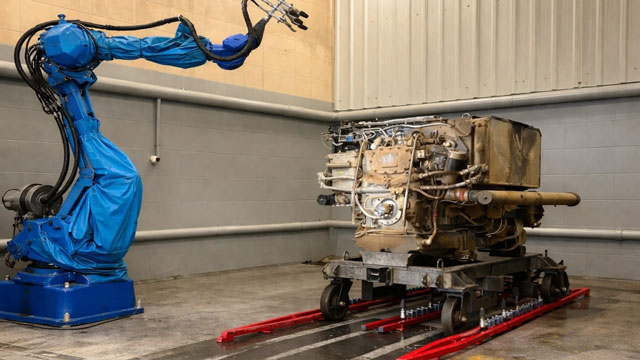
The system operates autonomously, eliminating the need for soldiers to be physically present in hazardous environments exposed to chemicals, oils or extreme heat.
Ruby AI was founded in 2020 by Daniel Ben Dov at the Bar Lev High-Tech Park in northern Israel. Ben Dov previously held management positions in the space and defence sectors, including roles at Gilat Satellites and Elbit Systems. The company currently employs around 20 professionals, primarily engineers specialising in software, hardware, aerospace and physical artificial intelligence.
“We are developing both the robotic arms themselves and their brains,” Ben Dov said, explaining that the firm has created a Physical AI core capable of learning and understanding the physical environment and executing precise actions. “This is not a sterile factory robot, but one that can work in mud, dust, heat and cold,” he added.
The system was developed during the ongoing conflict to remove soldiers from dangerous maintenance tasks and is now fully operational, according to the company.
Beyond tank servicing, Ruby AI has gained attention for its refuelling robots deployed in the United Arab Emirates. The system reportedly performs full refuelling operations without human contact, even in explosive environments with strict safety requirements.
Ben Dov said the technology’s ability to handle hazardous materials opens broader possibilities for military maintenance. Future developments include robots designed to replace heavy wheels on tanks and bulldozers — tasks that currently require intense physical effort and carry injury risks. The robots can reportedly handle weights exceeding 100 kilograms and operate alongside soldiers, assuming the most dangerous aspects of the job.
“We are not developing cute robots that fold laundry,” Ben Dov said. “We focus on difficult, repetitive physical work in places where a person is not supposed to be.”
The company is also working on robots capable of clearing underground tunnels, a task considered highly dangerous for soldiers. According to Ben Dov, such environments require mission-specific designs rather than humanoid models.
In addition, Ruby AI is exploring applications in military medicine, including five-fingered bionic robotic arms that could assist in physiotherapy and operate in areas affected by chemical or biological hazards.
While the IDF is evaluating these developments cautiously, officials indicate that robotics will increasingly play a role in reducing risk, workload and exposure for soldiers, focusing on support functions rather than frontline combat.