Daijiworld Media Network – Bengaluru
Bengaluru, Feb 16: Drinking water contamination in Karnataka has seen a significant decline over the past three years, according to information presented in the Lok Sabha by the Union Ministry of Jal Shakti recently.
Chemical contamination cases stood at 24,917 in 2023-24, which declined to 17,261 in 2024-25 and further dropped to 10,911 in 2025-26 (so far). Bacterial contamination has reduced even more sharply — from 4,670 in 2023-24 to 2,574 in 2024-25, and to just 452 cases recorded so far in 2025-26.
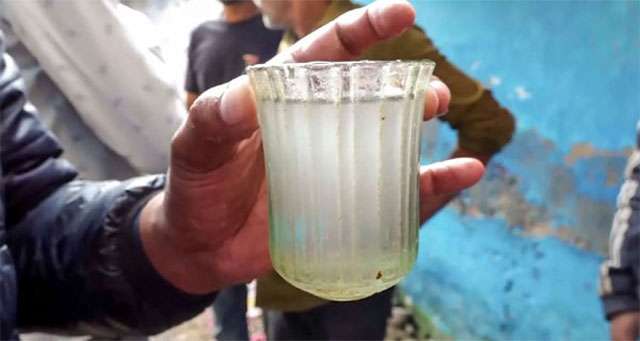
A district-wise review by type of contamination shows that while improvements are evident, problems persist in some districts. In 2023-24, nitrate and fluoride contamination were widespread. Districts with higher nitrate contamination included Chikkaballapur (563), Chitradurga (504), Vijayapura (340), Mandya (316) and Tumakuru (300). Higher fluoride levels were reported in Chitradurga (437), Chikkaballapur (389), Raichur (320) and Tumakuru (211).
Microbial contamination was notable in Bengaluru Urban (E. coli 338; total coliform 444), Chikkaballapur (E. coli 404; total coliform 838), Mandya (E. coli 48; total coliform 483) and Hassan (E. coli 81; total coliform 182) districts.
Data for 2025-26 indicates a faster decline in both chemical and bacterial quality deviations. The total number of nitrate samples, which was 4,003 in 2023-24, decreased to 3,129 in 2024-25 and further to 2,224 so far in 2025-26. Fluoride cases have reduced from 2,269 to 1,647 and then to 1,169.
There has been a significant reduction in bacterial contamination, with E. coli cases in the state dropping to 315 and total coliform to 333 so far this year. However, the issue persists in some districts. In 2025-26, higher nitrate levels were reported in Mandya (336), Vijayapura (264), Koppal (285), Belagavi (230), Chitradurga (214) and Chikkaballapur (212).
Fluoride contamination has continued in Chitradurga (241), Vijayapura (171), Raichur (125) and Tumakuru (100). Though the overall numbers have reduced, microbial contamination has been observed in Bidar (E. coli 48; coliform 48), Kalaburagi (64; 64), Yadgir (53; 55) and Raichur (45; 45) districts.
Meanwhile, in some parts of Dakshina Kannada, Udupi and Bengaluru Rural districts, recent data shows that contamination is very low or minimal across most parameters. Although higher microbial contamination was observed in Bengaluru Urban in 2023-24, it declined in 2024-25 and has reduced to almost minimal levels in 2025-26. This year, deviations have been reported only in a few chemical parameters.
Overall sample contamination levels declined in 2024-25. However, nitrate levels still remain high in some districts — Chikkaballapur (382), Vijayapura (359), Koppal (349), Mandya (373), Belagavi (302) and Tumakuru (198). Fluoride contamination has continued in Tumakuru (248) and Chitradurga (252). Though overall levels have decreased, microbial contamination is still seen in Mandya (E. coli 201), Koppal (196), Mysuru (235) and Kolar (E. coli 380) districts.