Daijiworld Media Network - Riyadh
Riyadh, Feb 26: Saudi authorities have introduced sweeping new restrictions on poultry and table egg imports, placing a full ban on 40 countries and partial regional restrictions on 16 others amid persistent global animal disease concerns.
The revised import list, reviewed by Okaz, marks one of the most extensive updates in recent years and reflects heightened precautionary measures to safeguard public health and strengthen food safety standards in the Kingdom.
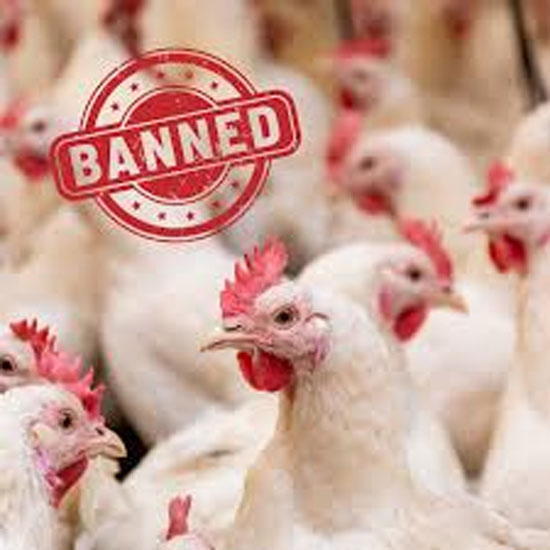
The decision was issued by the Saudi Food and Drug Authority (SFDA) as part of its ongoing monitoring of global epidemiological developments. The authority stated that the list of restricted countries is subject to periodic review in line with international disease reports and updated risk assessments.
While some bans have been in place since 2004, additional countries have been added progressively over the years due to outbreaks of highly pathogenic avian influenza and other poultry-related diseases. Officials emphasised that regulatory adjustments are made in response to evolving disease patterns worldwide.
The full prohibition on poultry and table egg imports applies to:
Afghanistan, Azerbaijan, Germany, Indonesia, Iran, Bosnia and Herzegovina, Bulgaria, Bangladesh, Taiwan, Djibouti, South Africa, China, Iraq, Ghana, Palestine, Vietnam, Cambodia, Kazakhstan, Cameroon, South Korea, North Korea, Laos, Libya, Myanmar, United Kingdom, Egypt, Mexico, Mongolia, Nepal, Niger, Nigeria, India, Hong Kong, Japan, Burkina Faso, Sudan, Serbia, Slovenia, Ivory Coast and Montenegro.
Imports of poultry meat and table eggs from these countries are completely prohibited under the current directive.
A partial ban has been imposed on specific provinces and cities in the following countries:
Australia, United States, Italy, Belgium, Bhutan, Poland, Togo, Denmark, Romania, Zimbabwe, France, Philippines, Canada, Malaysia, Austria and Democratic Republic of the Congo.
In these cases, restrictions apply only to designated regions rather than nationwide prohibitions.
The authority clarified that poultry meat and related products subjected to sufficient heat treatment or processing capable of eliminating avian influenza or Newcastle disease viruses may qualify for exemption from the temporary ban.
However, exemptions are conditional. Products must fully comply with approved health requirements and standard specifications, be accompanied by an official health certificate issued by competent authorities in the exporting country, confirm adequate virus-eliminating treatment, and originate from an approved facility.
The SFDA reiterated that all stipulated conditions must be strictly met for exemptions to apply, without compromising the requirement that products originate from accredited establishments.