Daijiworld Media Network - Mumbai
Mumbai, Mar 6: Maharashtra’s ecological outlook presents a mixed picture, with gains in tree cover and wildlife conservation contrasting with degradation in core forest ecosystems and rising pollution in major rivers, according to the Maharashtra Economic Survey 2025-26.
The survey notes that while conservation programmes and social forestry initiatives have improved certain environmental indicators, forest degradation, rapid urbanisation and inadequate sewage treatment continue to strain the state’s ecological systems.
According to the report, Maharashtra’s total forest cover stands at 50,859 sq km, accounting for 16.5 per cent of its geographical area of 3,07,713 sq km, which remains significantly below the 33 per cent benchmark set under the National Forest Policy.
Compared to the 2021 assessment, the state has recorded a decline of 54.47 sq km in forest cover. The survey also clarified that “forest area” and “tree cover” are distinct categories and should not be used interchangeably when assessing environmental health.
Forest area refers to land legally notified as forest by the government, including reserved or protected forests, which may not necessarily have dense vegetation. Tree cover, on the other hand, refers to smaller patches of trees outside recorded forests, including plantations, roadside trees and scattered clusters along canals or agricultural fields.
The survey stated that Maharashtra ranks first in the country in tree cover outside forests. According to the India State of Forest Report 2023, the state has 14,525 sq km of tree cover, accounting for 4.7 per cent of its geographical area.
The figure has steadily increased over the past decade from 10,806 sq km in 2019 to 12,108 sq km in 2021 and further to 14,525 sq km in 2023. The rise has largely been attributed to social forestry programmes, urban greening drives and plantation initiatives.
However, environmental analysts cited in the survey cautioned that an increase in tree cover does not necessarily compensate for the ecological loss caused by degradation of natural forests, which support richer biodiversity and play a crucial role in carbon storage and ecosystem stability.
In terms of canopy density, 19.4 per cent of Maharashtra’s forests are classified as very dense, 42.4 per cent as moderately dense and 38.2 per cent as open forests.
The survey also pointed out that environmental pressures such as industrialisation, urban expansion and deforestation are contributing to climate anomalies in the state, including rising temperatures and changing rainfall patterns.
At the same time, some ecological indicators have shown improvement. Maharashtra has 315.09 sq km of mangrove cover, accounting for about 6.3 per cent of India’s total mangrove area. To strengthen protection, the state has notified 11,548 hectares of mangroves as reserved forests.
Wildlife conservation efforts have also yielded positive results, with the tiger population rising from 312 in 2018 to 444 in 2022.
Despite these gains, the survey flagged serious concerns over water pollution and waste management. Major rivers in the state continue to face severe ecological stress.
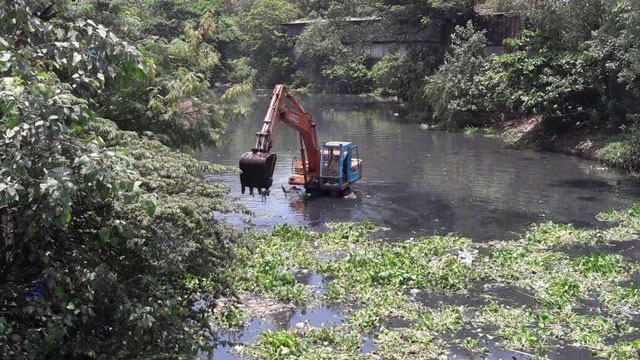
Data from the Maharashtra Pollution Control Board cited in the report shows that Mumbai’s Mithi river records extremely high pollution levels, with biochemical oxygen demand measured at 101.8 mg per litre and faecal coliform levels at 1,882.2 mg per litre.
Similarly, the Mula-Mutha river in Pune continues to show high BOD and faecal coliform levels, indicating persistent contamination from untreated sewage and urban discharge.
A key factor behind river pollution is the gap in sewage treatment capacity. The survey stated that only 51.4 per cent of the sewage generated in the state was treated during 2025-26 up to December, meaning nearly half of the wastewater continues to be discharged untreated into rivers and other water bodies.
The state has performed relatively better in managing solid waste. Of the 5.44 lakh metric tonnes of solid waste generated daily in 2024-25, around 81.8 per cent was treated.
The government has also launched initiatives such as the ‘Majhi Vasundhara Abhiyaan’, involving over 27,000 gram panchayats, to promote environmental awareness and expand green cover.
However, the survey suggests that while such initiatives are producing visible improvements in areas such as tree plantations and wildlife conservation, they have yet to fully counter the environmental pressures created by rapid economic growth and urbanisation.