Daijiworld Media Network - Tehran
Tehran, Apr 2: Masoud Pezeshkian has released an open letter directed at the American public, sharply criticizing US policies and accusing United States of acting in the interests of Israel amid escalating geopolitical tensions.
In his message, Pezeshkian rejected claims that Iran poses a global threat, asserting that the country has not pursued aggression, expansion, or domination in modern history. He emphasized that the Iranian people hold no hostility toward Americans and argued that portraying Iran as a danger is a constructed narrative aimed at justifying military and economic pressure.
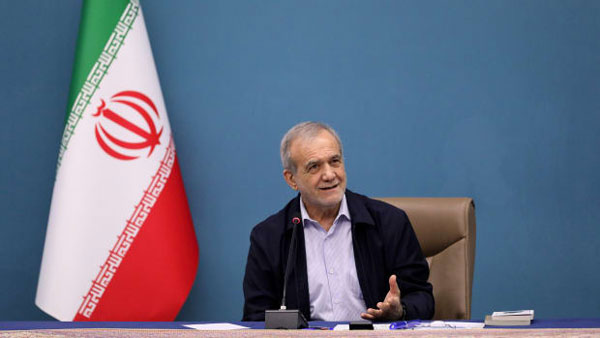
The letter also pointed to the extensive US military footprint in the region, with Pezeshkian describing it as disproportionate and accusing Washington of carrying out recent “aggressions” that he said have impacted civilian infrastructure.
A significant portion of the message focused on historical grievances. Pezeshkian referenced the 1953 Iranian coup d'état, calling it an unlawful intervention that disrupted Iran’s democratic trajectory. He argued that mistrust has deepened over decades due to US support for the Shah, backing of Saddam Hussein during the Iran-Iraq War, and continued sanctions and military actions.
Despite these tensions, he highlighted Iran’s domestic progress in areas such as education, healthcare, and infrastructure, presenting it as evidence of resilience under pressure.
Pezeshkian also accused the US of acting as a “proxy” for Israel, suggesting that narratives around an “Iranian threat” are being amplified to serve strategic and political objectives, including diverting attention from ongoing conflicts such as those in Gaza. He questioned whether Washington’s foreign policy still aligns with its stated “America First” priorities.
The letter comes at a time of heightened strain between the two nations, marked by sanctions, stalled diplomatic efforts, and reported attacks on key infrastructure. It also follows remarks by Donald Trump, who recently claimed that Iran had sought a ceasefire—an assertion strongly denied by Iranian officials.
With both sides maintaining opposing narratives, the exchange underscores the widening divide and continued uncertainty surrounding US-Iran relations.