Daijiworld Media Network - Tehran
Tehran, Apr 15: Maritime activity in the Strait of Hormuz has taken a tense turn as vessels reportedly altered their tracking data while navigating through the strategic waterway, following a United States-led blockade targeting Iranian ports.
According to a report by British shipping publication Lloyd’s List, at least two ships adjusted their Automatic Identification System (AIS) destination details while en route to Iran. The change came shortly after the blockade was enforced, raising concerns over attempts to evade monitoring systems.
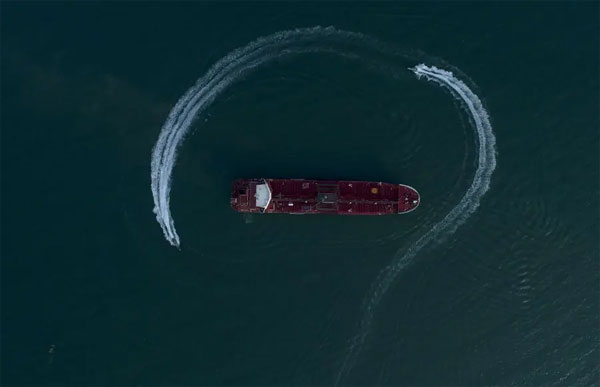
The vessels, identified as Iran-flagged container ships, were initially signaling their destination as Bandar Abbas, a key port in southern Iran. However, while transiting the strait, they modified their AIS data to display the broader term “PG Ports” — referring to Persian Gulf ports — before later continuing toward Bandar Abbas after clearing the chokepoint.
Analysts cited in the report noted that such tactics could hinder US surveillance efforts by complicating vessel tracking and requiring greater intelligence resources to monitor maritime traffic linked to Iran.
The US Central Command confirmed that more than 10,000 military personnel — including sailors, marines, and air force units — are actively enforcing the blockade. The operation involves over a dozen warships and multiple aircraft, targeting ships of all nationalities attempting to enter or leave Iranian ports.
Officials stated that within the first 24 hours of enforcement, no vessel successfully bypassed the blockade. At least six commercial ships reportedly complied with US directives to turn back toward ports in the Gulf of Oman.
The blockade extends across Iran’s coastal regions, covering ports along both the Arabian Gulf and the Gulf of Oman.
Despite restrictions, maritime tracking firm Kpler reported that at least nine commercial vessels have crossed the Strait of Hormuz since Monday, though overall traffic has dropped sharply to less than 10 percent of pre-conflict levels. Prior to the escalation, more than 100 ships transited the strait daily.
The situation follows joint US-Israel military strikes against Iran launched on February 28, significantly escalating regional tensions.
Meanwhile, US President Donald Trump issued a stark warning, stating that any Iranian vessel approaching the blockade would be “eliminated,” underscoring the high-stakes nature of the ongoing standoff.