Daijiworld Media Network - Panaji
Panaji, Apr 22: After nearly 10 days of silence over allegations surrounding the collection of traffic fines exceeding Rs 3 crore, the Goa Traffic Police on Tuesday issued an official clarification, asserting that its enforcement drive did not violate any legal provisions.
In a press release from its headquarters at Altinho, Superintendent of Police (Traffic) Prabodh Shirwaikar stated that the certification requirement under Rule 167-A of the Central Motor Vehicles Rules, 1989, does not apply to the manner in which challans are currently issued in the state.
He explained that all challans in Goa are issued manually by enforcement personnel after due verification of data captured through devices such as alcometers, speed radar guns, and body-worn cameras, and not through any automated challan generation system.
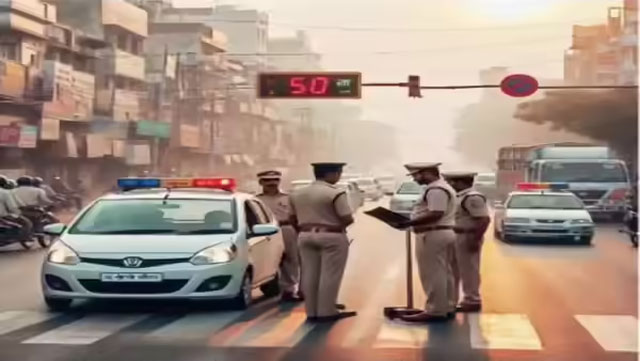
“All challans are issued manually by enforcement personnel after due verification of data obtained from devices such as alcometers and speed radar guns. Therefore, the provisions relating to automated enforcement under Rule 167-A are not applicable in the present context,” the statement said.
The clarification comes in response to reports published by The Goan on April 12 and April 14, along with an editorial on April 15, which had raised questions about the legality of the fines collected.
The department further clarified that provisions governing automated enforcement systems in “million-plus” cities are not applicable to Goa, as no city in the state falls under that category. It also emphasised that all penalties are collected strictly through digital modes, including UPI, card payments, and online transactions, ruling out any cash collection.
However, despite distancing itself from the central framework applicable to 132 cities with populations exceeding 10 lakh, official records indicate that certification for enforcement devices was obtained only on February 20, 2026 — after RTI queries were filed by The Goan.
By that time, a significant portion of the enforcement drive had already been completed, with fines amounting to approximately Rs 3.24 crore collected since 2024.
The latest clarification, however, remains silent on a key issue raised by its own disclosures — the use of mobile phones by traffic personnel to document violations and generate challans.
Records show that in 2025 alone, Traffic Cells in North Goa issued 22,042 motor vehicle challans based on photographs captured by police personnel, collecting Rs 1,08,52,500 in compounding fees. In South Goa, an additional 30,249 challans were issued, with compounding fees amounting to Rs 97,07,100. Separate violations were also recorded by the headquarters.
The developments have raised fresh questions over enforcement practices and transparency, even as the department maintains that its actions remain within the legal framework.