Daijiworld Media Network – Gaza
Gaza, May 1: Acute water shortages continue to plague Gaza months after a ceasefire halted major hostilities, with displaced families in camps battling daily hardships to access basic supplies.
In the sprawling Muwasi tent settlement, where hundreds of thousands have taken refuge, families rush towards water trucks, often leading to chaos. Residents say between 500 to 1,000 people gather around each tanker, scrambling to collect limited water in plastic containers.
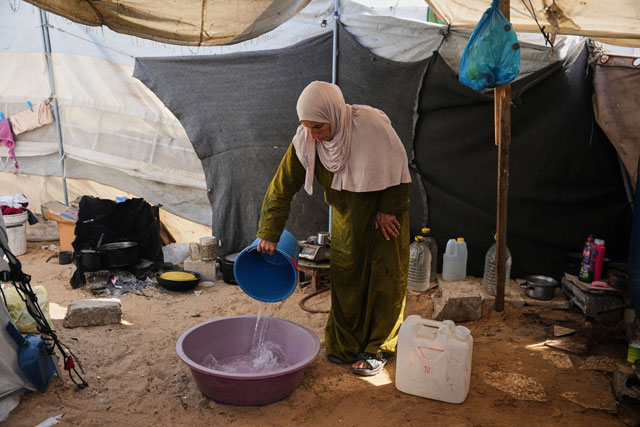
“For days, we wait and fight just to get a small share,” said a displaced resident, describing the situation as severe suffering.
According to United Nations estimates, nearly 90 per cent of Gaza’s water infrastructure — including desalination plants and sewage treatment facilities — has been destroyed during the conflict. As a result, around 80 per cent of the population now depends on water supplied by tanker trucks at central distribution points.
Residents say access remains inconsistent, with water trucks arriving irregularly. Many are forced to walk long distances, sometimes returning empty-handed.
While Israeli authorities maintain that there are no restrictions on water imports and that pipelines are operational, locals say bottled water available in markets is unaffordable due to widespread economic collapse and loss of livelihoods.
Humanitarian organisations have raised concerns over the impact of shortages. A recent report by Doctors Without Borders (MSF) alleged that restrictions on essential materials such as pipes, fuel, and water treatment chemicals have hampered restoration efforts, leading to sanitation failures and rising health risks.
The report further warned that inadequate water access is contributing to sewage overflows and increasing cases of waterborne diseases among Gaza’s population of over 2 million.
However, Israeli authorities have rejected the allegations, stating that sufficient water is being supplied daily and dismissing the claims as unfounded.
With reconstruction efforts stalled amid ongoing political and security tensions, the water crisis continues to pose a serious humanitarian challenge for residents struggling to rebuild their lives.