Daijiworld Media Network – Washington
Washington, May 1: The Trump administration has asserted that its military engagement with Iran has effectively “terminated” following a ceasefire in early April, a move seen as an attempt to bypass the requirement of seeking congressional approval under the War Powers Resolution.
The claim builds on remarks made by US Defense Secretary Pete Hegseth during Senate testimony, where he suggested that the ceasefire had paused hostilities, thereby halting the 60-day clock mandated by the 1973 law governing military action without Congress’s consent.
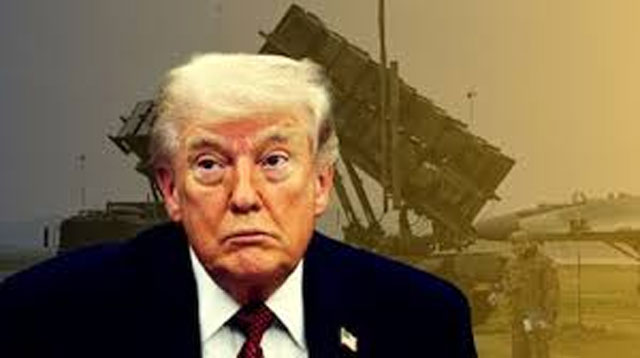
A senior administration official, speaking anonymously, said that “hostilities that began on February 28 have terminated,” noting that there has been no exchange of fire between US and Iranian forces since the ceasefire took effect on April 7.
Despite the ceasefire, tensions remain high in the region. Iran continues to control access to the strategic Strait of Hormuz, while the US Navy has maintained a blockade to restrict Iranian oil shipments.
Under the War Powers Resolution, President Donald Trump was required to seek congressional authorisation by Friday if military operations continued beyond 60 days. The law allows for a possible 30-day extension, but critics argue that the administration’s interpretation of a “paused” or “terminated” conflict has no legal basis.
Democrats, along with some Republicans, have strongly opposed the move. Senator Susan Collins emphasised that the deadline “is not a suggestion; it is a requirement,” and called for a clearly defined mission and strategy for any continued military involvement.
Senator Tim Kaine described the administration’s reasoning as “novel” and lacking legal support, while legal experts echoed similar concerns. Katherine Yon Ebright, an expert on war powers, stated that nothing in the law allows for the suspension or termination of the 60-day clock due to a ceasefire.
Meanwhile, former National Security Council official Richard Goldberg suggested rebranding the operation under a new mission focused on self-defence and reopening maritime routes, which could potentially sidestep legal hurdles.
The development highlights growing friction between the executive branch and lawmakers over the scope of presidential war powers, with the Iran situation emerging as a key test case for the limits of the War Powers Resolution.