Daijiworld Media Network – Mumbai
Mumbai, May 27: In a major boost to urban environmental planning, the Centre has welcomed a proposal to establish a first-of-its-kind “Flamingo Blue Carbon Urban Complex” across the Mumbai Metropolitan Region (MMR), recognising wetlands as crucial climate infrastructure rather than land available for reclamation and development.
The proposal was submitted to Prime Minister Narendra Modi ahead of World Environment Day by the MMR-based NatConnect Foundation along with a detailed 10-page policy white paper.
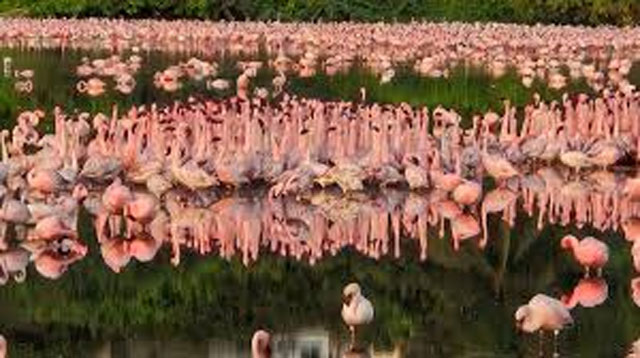
The initiative aims to transform the Mumbai region into a global model that integrates wetlands, mangroves, mudflats, flamingo habitats, carbon sequestration, eco-tourism and climate finance under a comprehensive climate-resilience framework.
Responding within 24 hours of the submission, the Union Ministry of Environment, Forest and Climate Change (MoEFCC) appreciated the proposal and directed the Maharashtra State Wetland Authority to examine it on a priority basis. The ministry has also sought an action-taken report from the state authority.
The proposal assumes significance at a time when Mumbai and surrounding urban areas are facing increasing climate-related challenges, including recurrent flooding, rising temperatures, coastal vulnerability and ecological degradation caused by reclamation and unplanned urbanisation.
According to the white paper, flamingos are not merely migratory birds that attract tourists, but ecological indicator species whose presence reflects the health of interconnected wetlands and tidal ecosystems across Thane Creek, Sewri mudflats, Uran wetlands and Navi Mumbai’s coastal regions.
NatConnect director B N Kumar warned that ecologically sensitive wetlands were increasingly being treated as “monetisable land parcels” despite their long-term environmental and economic value.
The paper cited CIDCO’s proposal to monetise the 12-hectare DPS Flamingo Lake parcel, even as the site is under consideration for Conservation Reserve status, highlighting what environmentalists describe as a conflict between rapid urban expansion and ecological sustainability.
Environmental groups across the Mumbai Metropolitan Region supported the proposal and cautioned that continued destruction of wetlands and disruption of natural tidal systems were worsening flood risks in the region.
Nandakumar Pawar of Sagar Shakti said reclamation activities were weakening the area’s natural flood-buffer systems, thereby increasing the damage caused by extreme rainfall events.
Jyoti Nadkarni of the Kharghar Hills and Wetlands Forum described flamingos as “keystone wetland species” whose feeding activity helps aerate mudflats, oxygenate sediments and regulate algae, thereby supporting marine biodiversity and sustaining fish and crustacean populations relied upon by coastal communities.
Palm Beach Greens convenor Shrikant Patki said Mumbai’s long-term economic resilience would depend more on protecting wetlands, mangroves and tidal ecosystems than on unchecked concrete-driven development.
The policy document also highlighted that mangroves and tidal wetlands are among the world’s most carbon-rich ecosystems and play a vital role in carbon absorption, flood mitigation, urban cooling and biodiversity conservation.
It further noted that wetlands generate long-term ecological and economic benefits through blue-carbon credits, eco-tourism, biodiversity finance and reduced flood-related losses — advantages that are often ignored in conventional real-estate valuation systems.
Environmentalists warned that continued reclamation, pollution and fragmented urbanisation could irreversibly damage one of India’s most valuable coastal ecosystems at a time when cities around the world are increasingly adopting nature-based climate solutions to tackle climate change.