Daijiworld Media Network – New Delhi
New Delhi, May 27: In a major boost to the Election Commission of India (ECI), the Supreme Court on Wednesday upheld the Special Intensive Revision (SIR) of electoral rolls, describing the exercise as “legally tenable” and aligned with the constitutional objective of ensuring free and fair elections.
The verdict was delivered by a bench comprising Chief Justice of India Surya Kant and Justice Joymalya Bagchi, days before the third and final phase of the SIR exercise is scheduled to begin on May 30 across 16 states and three Union Territories.
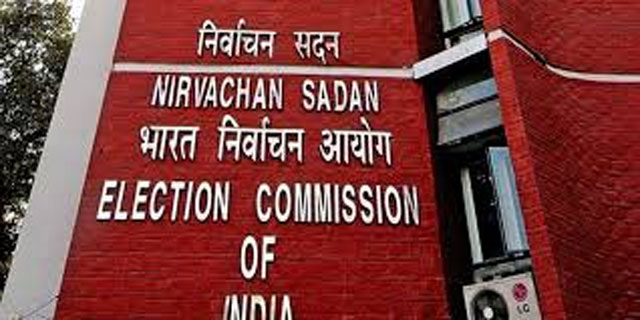
The apex court examined whether the Election Commission had acted within its powers under Article 326 of the Constitution, the Representation of the People Act, 1950, and related statutory provisions while carrying out the revision process.
“We are equally satisfied that the object sought to be achieved by the SIR bears a direct nexus to the constitutional goal of free and fair elections,” the Chief Justice observed while pronouncing the verdict.
The court further stated that the SIR exercise did not undermine constitutional obligations and instead strengthened the mandate provided under Article 324 of the Constitution.
“The impugned SIR does not detract from the constitutional obligation of free and fair elections,” the bench noted.
The Supreme Court also clarified that the revision process did not override existing election laws and was well within the statutory framework provided under Section 21(3) of the Representation of the People Act.
“Therefore, it cannot be said that the Commission has acted in excess of its statutory powers,” the bench added.
The court rejected arguments challenging the process merely because it differed from the ordinary electoral roll revision mechanism.
The ruling is being viewed as a setback for Opposition parties, many of whom had criticised the exercise over concerns regarding timing, voter deletions and the possibility of genuine voters being excluded from electoral rolls.
The SIR exercise was first launched in Bihar in June 2025 ahead of the Assembly elections. According to reports, more than 60 lakh names, including deceased voters, were removed during the process. In West Bengal, nearly 90 lakh names were reportedly deleted ahead of elections.
Under the revision exercise, voters whose names were absent from the 2002 or 2003 electoral rolls were required to provide documentary proof linking them to individuals listed in those earlier records.
Initially, the Election Commission had recognised 11 documents for verification purposes and excluded Aadhaar. However, during the hearings, the Supreme Court directed the poll body to include Aadhaar among the acceptable identity documents.
Despite allegations from Opposition parties regarding voter suppression and bias, the Election Commission maintained that the exercise was aimed at ensuring the purity of electoral rolls and preventing ineligible or non-citizen entries in the voter database.