Daijiworld Media Network - New Delhi
New Delhi, May 27: The Supreme Court on Wednesday upheld the validity of the Election Commission’s Special Intensive Revision (SIR) exercise of electoral rolls, while issuing key directions mandating that individuals removed on suspicion of citizenship must be referred to the competent authority under the Citizenship Act, 1955 for final determination.
A Bench headed by Chief Justice of India Surya Kant and Justice Joymalya Bagchi clarified that such cases must be sent to the appropriate authority within four weeks and decided in accordance with law, preferably before the next Parliamentary, Assembly, or local body elections.
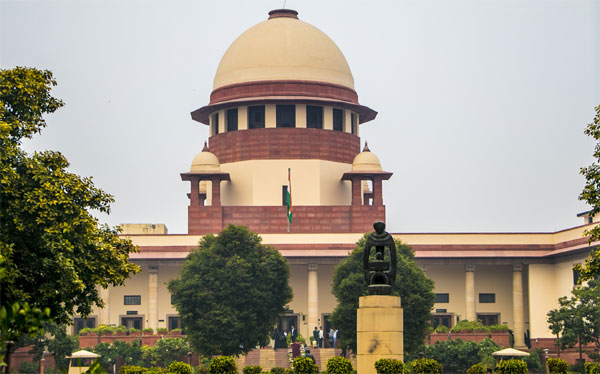
The Court stated that if the competent authority subsequently confirms an individual as an Indian citizen, their name must be restored in the electoral roll after due process.
In its detailed judgment, the apex court held that the Election Commission of India is empowered to conduct a limited inquiry into citizenship solely for determining eligibility for inclusion in electoral rolls. However, it drew a clear distinction between administrative scrutiny for electoral purposes and formal adjudication of citizenship, which remains the domain of the central government.
The Court emphasised that such inquiry by the Election Commission does not amount to a final determination of citizenship and is confined strictly to electoral consequences. It also clarified that exclusion from voter lists does not extinguish a person’s citizenship claims or prevent them from seeking adjudication under the Citizenship Act.
Rejecting arguments that the Election Commission had exceeded its authority, the Court held that its powers stem from Articles 324, 325 and 326 of the Constitution, read with provisions of the Representation of the People Act, 1950. It observed that ensuring electoral integrity necessarily involves verifying whether individuals meet the legal requirement of being citizens.
At the same time, the Court underlined that any decision to delete a name from electoral rolls on grounds of suspected non-citizenship must remain provisional until reviewed by the competent authority. The Election Commission is therefore obligated to refer such cases for final determination.
The judgment also reiterated that non-citizens are disqualified from being registered as voters under Section 16 of the Representation of the People Act, and that maintaining accurate electoral rolls is a constitutional responsibility of the poll body.
The Court stressed that citizenship is not merely an administrative classification but a fundamental legal status tied to rights, identity, and constitutional recognition. It said any process involving citizenship-related questions must adhere to strict procedural fairness and safeguards.
Upholding the SIR exercise as a whole, the Bench ruled that it is intended to improve the accuracy and integrity of electoral rolls and meets the test of proportionality, with adequate safeguards to prevent arbitrary exclusion.
The ruling came in response to petitions challenging the SIR exercise, which had raised concerns that the process could disproportionately affect vulnerable groups, including migrants and marginalised communities. The Election Commission defended the exercise as necessary to eliminate duplication and ensure electoral integrity.
With this judgment, the Supreme Court has effectively balanced the Election Commission’s mandate to maintain accurate voter rolls with safeguards ensuring that citizenship determination remains within the legal framework established under the Citizenship Act.